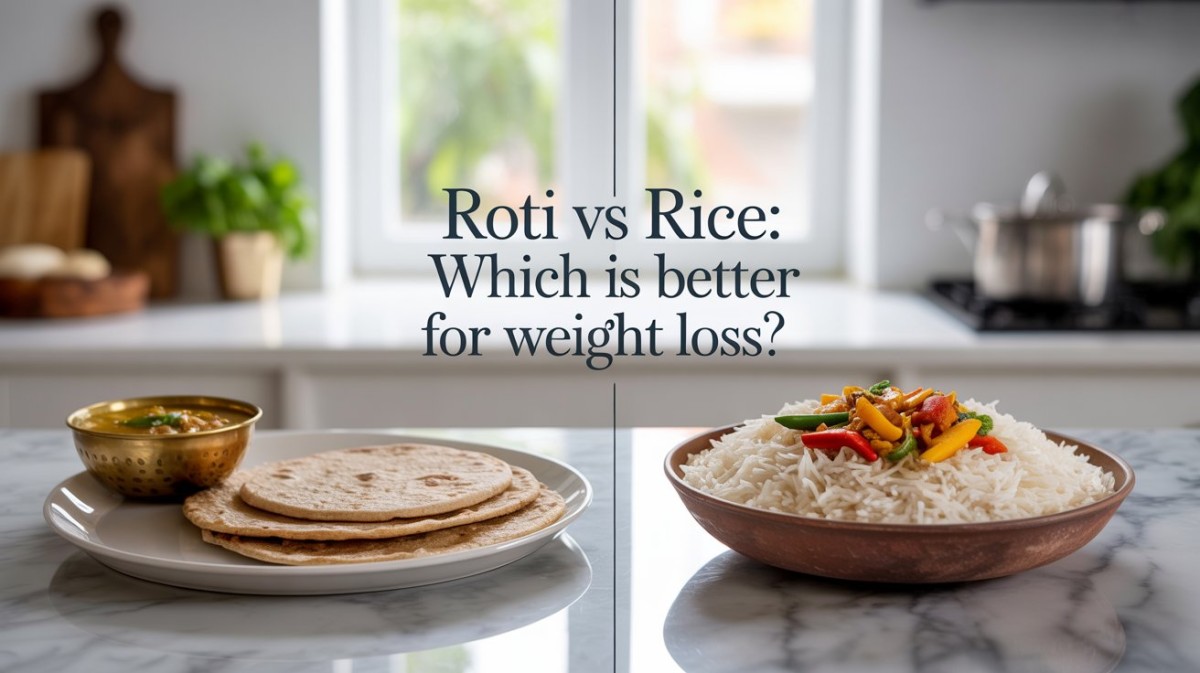
The most debated question associated with the Indian diet is write vs roti to shed those extra pounds?
Being Indian and someone planning your daily dietary routine, it's quite tough to choose from one, whether you’re trying to lose weight, manage blood sugar, or simply eat healthier. Choosing the right staple matters the most.
In this context, it is obvious that a typical Indian plate often includes more than one source of carbohydrates. Carbohydrates are considered to be the main source of energy, along with fats. Therefore, when you think of eliminating them, it can lead to low energy and even harm your overall health. So, instead of restricting it, understand that balance and portion control can help you in this case. Let's now break down and see what actually works best for weight loss.
Nutritional Comparison: Roti vs Rice
The primary choice depends on the nutritional content of each staple. Both roti and rice are rich sources of carbohydrates. Here are the key differing factors:
Roti (Whole Wheat)
Higher in fiber
Contains more protein
Keeps you fuller for longer
Rice (White Rice)
Easier to digest
Lower in fibre
Quick source of energy
If you’re looking for sustained energy and fullness, roti has a slight advantage.
Nutritional Value Per Serving |
White Rice (Cooked) – 100g |
Whole Wheat Roti (2 Nos., 45g, 5” Diameter) |
|
Calories (kcal) |
130 |
133 |
|
Carbohydrate (g) |
28 |
21 |
|
Protein (g) |
2.7 |
5 |
|
Fat (g) |
0.3 |
3 |
|
Dietary Fibre (g) |
0.4 |
2.2 |
Roti vs Rice for Weight Loss
This is one of the most queried questions, both online and offline
Roti can best help you in losing weight because it has more fibre when compared to rice and digests slowly.
Rice, especially white rice, can spike hunger faster due to quicker digestion.
If you're trying to lose weight, go for roti or switch to brown rice occasionally.
Calories: Roti vs Rice
1 medium roti - ~70–80 calories
1 cup cooked rice - ~200 calories
Portion size matters the most because you may end up eating more rice without realising it, which increases calorie intake.
Glycemic Index (GI): What Matters?
The glycemic index measures how fast food raises blood sugar.
White rice is high GI, and it leads to a quick sugar spike
Roti (whole wheat) → Medium GI (slower release)
For people who have diabetes or insulin resistance, roti is usually a better option.
Roti is made from whole wheat, and it consists of complex carbohydrates, which digest slowly and release energy gradually. This helps in maintaining stable blood sugar levels and reduces hunger spikes.
Meanwhile,e in the case of rice, on the other hand, has a higher glycaemic index. It is digested quickly, causing a rapid increase in blood sugar levels, which can lead to early hunger and cravings.
Ideal Portion Sizes for Weight Loss
Portion control plays a crucial role in weight management. Instead of eliminating foods, you need to focus on balanced eating.
About 1 small bowl of rice (150–200g) or
2 medium-sized rotis (without oil or ghee)
So, it is suggested that you pair these with plenty of vegetables, dal, salads, and lean proteins. Ideally, 75% of your plate should consist of fibre-rich and protein-rich foods, whereas only 25% should be carbohydrates.
Is Rice Really Bad for Weight Loss?
Rice mostly gets blamed for weight gain, but this is a misconception. Most of the nations, such as Japan, consume rice daily yet maintain low obesity rates. The real difference depends mainly on portion control, lifestyle, and overall diet quality.
Rice is actually easy to digest, low in fat, a quick source of energy, and naturally low in sodium, which makes it heart-friendly.
Final Verdict: Roti or Rice?
There is no clear winner in the roti vs rice debate;e both have their own benefits.
Choose roti if you want more fibre, protein, and better blood sugar control.
Choose rice if you need quick energy or prefer a lighter meal, al just look at the portion size.
The best thing you can do is not to eliminate either, but to balance both based on your nutritional needs.