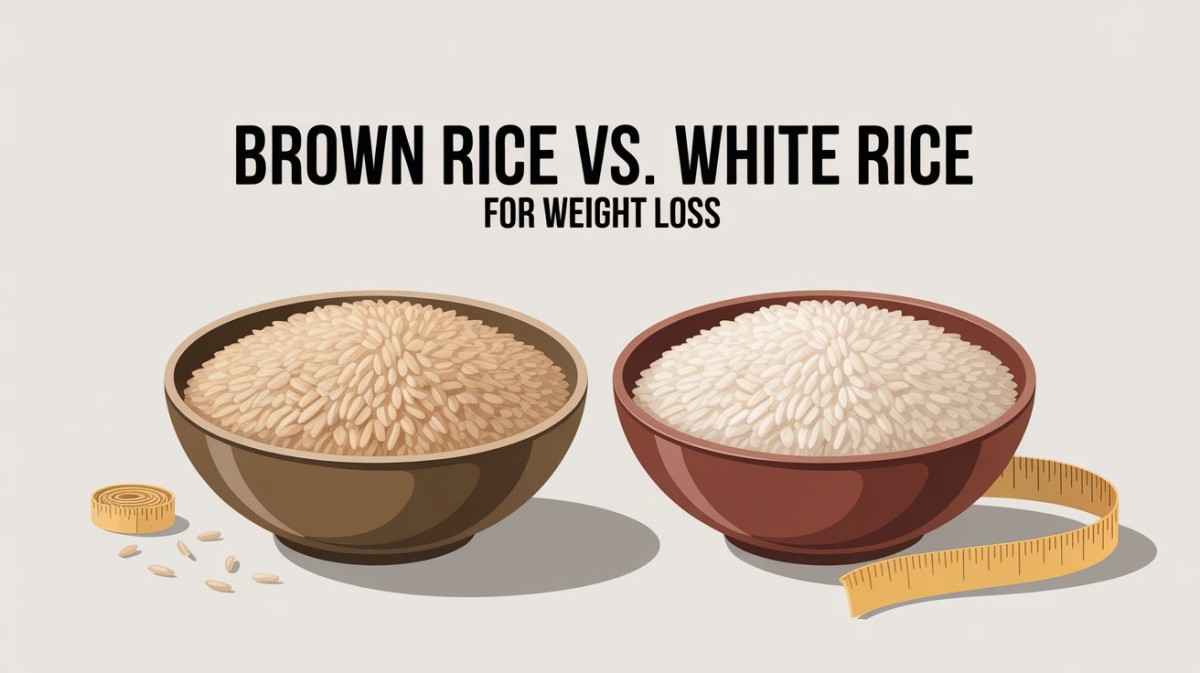
When trying to lose weight, one of the most debated food choices across the world is brown rice vs. white rice. Rice is a staple in most nations, especially inthe southern part of India. Therefore, it's highly essential for you to know which option supports weight loss better is important.
1. Nutritional Difference Between Brown Rice and White Rice
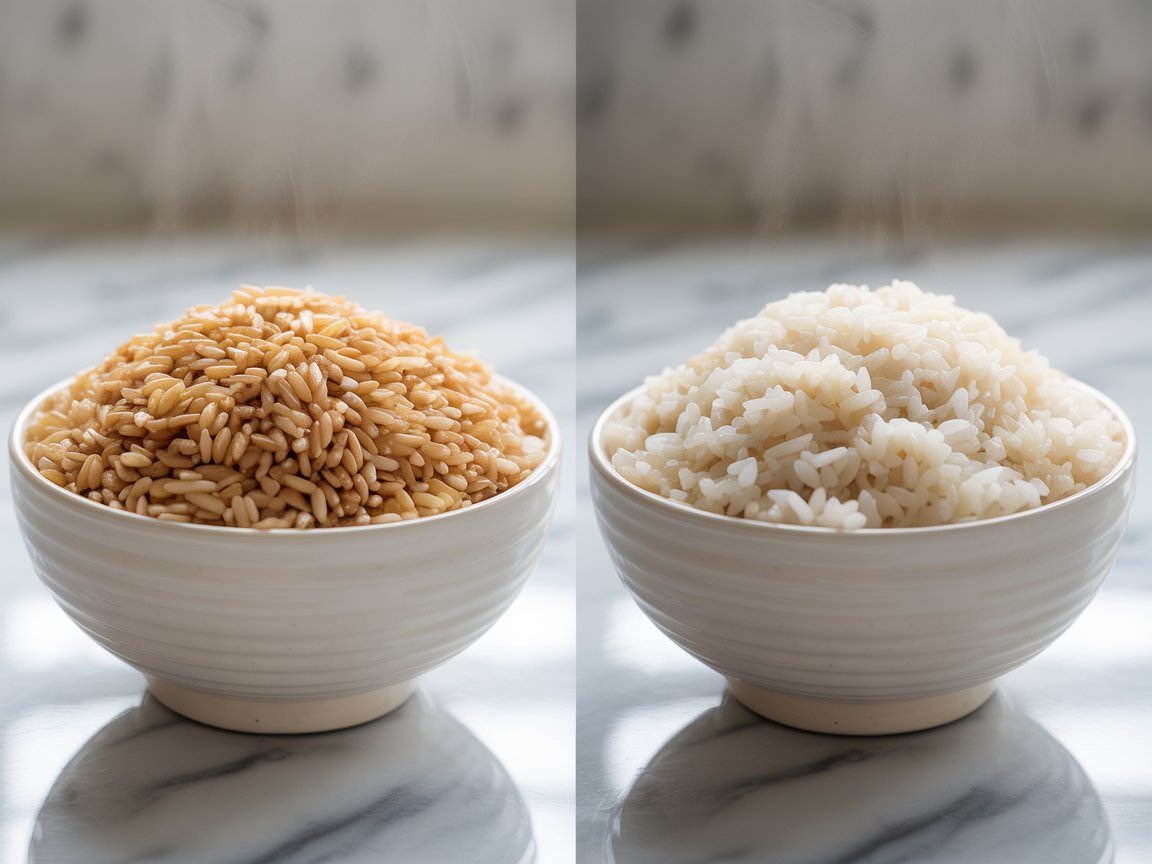 ❖ The key difference lies in processing.
❖ Brown rice is a whole grain. It contains the bran, germ, and endosperm.
❖ Meanwhile, the white rice is refined. The bran and germ are removed at the time of processing.
❖ According to the Harvard T.H. Chan School of Public Health, Brown rice contains more fiber, more B vitamins, more magnesium, and more antioxidants.
White rice, while still a source of carbohydrates, loses much of its fiber and micronutrients during milling.
Fiber Content (Key for Weight Loss)
1 cup cooked brown rice: ~3.5 grams fiber
1 cup cooked white rice: ~0.5–1 gram fiber
Fiber plays a major role in weight management.
Nutrient |
White Rice (1 cup) |
Brown Rice (1 cup) |
| Calories | 242 g | 218 g |
| Carbohydrates | 53.2 g | 45.8 g |
| Protein | 4.43 g | 4.52 g |
| Fat | 0.391 g | 1.62 g |
| Dietary Fiber | 0.558 g | 3.51 g |
| Phosphorus | 68.8 mg | 150 mg |
| Thiamine | 0.311 mg | 0.199 mg |
| Niacin | 3.42 mg | 2.59 mg |
| Vitamin B6 | 0.093 mg | 0.291 mg |
| Magnesium | 24.2 mg | 85.8 mg |
| Copper | 0.071 mg | 0.158 mg |
| Manganese | 0.071 mg | 2.14 mg |
| Iron | 2.77 mg | 1.03 mg |
2. Brown Rice and Weight Loss: What Research Says
 Higher satiety, i.e., the foods which are high in fiber increases fullness, keeping you aware of the calorie intake. Brown rice has higher fiber content, which can best help you prevent overeating.
As stated by the American Diabetes Association:
Brown rice: Medium GI
White rice: Higher GI
❖ Having lower GI foods can cause a slower rise in blood sugar.
❖ Reduce insulin spikes, and it helps manage hunger better.
❖ Frequent high insulin spikes can promote fat storage, which may make weight loss harder.
❖ A study published in the Southeast Asian Journal of Tropical Medicine and Public Health found that brown rice contains natural bioactive compounds that may help the body metabolise fats more efficiently and reduce fat accumulation. This means brown rice could play a supportive role in managing obesity.
❖ Another study in Plant Foods for Human Nutrition showed that when white rice was combined with high-fibre barley, it helped reduce appetite and overall energy intake. So rather than eliminating white rice, pairing it with whole grains can improve its nutritional quality and make it more supportive for weight control.
❖ Additionally, research published in BMJ Open suggests that a high intake of white rice is associated with a greater risk of developing diabetes, whereas brown rice appears to have protective effects. This highlights the importance of choosing whole grains more often, especially for long-term metabolic health.
3. White Rice: Is It Really Bad for Weight Loss?
Not necessarily.
❖ White rice is easy to digest, it is low in fat and moderate in terms of calories. The issue is mainly the portion size, not white rice itself.
❖ Research shows that when refined grains are consumed in excessive amounts, it is associated with weight gain and increased risk of metabolic issues.
❖ However, when eaten in controlled portions and paired with protein and vegetables, white rice can also be included in a calorie-controlled diet.
4. Calories: Brown vs White
Calorie difference is minimal:
Brown rice (1 cup cooked): ~215 calories
White rice (1 cup cooked): ~200 calories
The major difference is not calories, it’s fiber and nutrient density.
5. Which One Is Better for Weight Loss?
 Brown can be the better choice if you want better appetite control, you struggle with overeating, you want higher fiber intake or if you have blood sugar concerns.
White rice can work if you control portions, you combine it with protein (dal, paneer, chicken), you eat plenty of vegetables, and you maintain an overall calorie deficit.
6. Practical Advice for Indian Diets
If rice is a daily staple:
❖ Make a switch gradually that means mix 50% brown + 50% white rice.
❖ Keep portion size to 1 cup cooked per meal.
❖ Add fiber from vegetables and protein.
❖ Avoid excess oil and fried sides.
❖ Weight loss ultimately depends on total calorie intake and lifestyle, not just one food choice.
Final Verdict
Brown rice is generally better for weight loss due to higher fiber, better satiety, and improved blood sugar response. However, white rice is not generally to be completely avoided, but portion control and overall diet quality matter more.