PCOS, or “Polycystic Ovary Syndrome," has become a common health issue among women in this scientifically advanced world that has affected millions of women across the globe. In May 2026, health professionals decided to introduce new terminology: PMOS, or “Polyendocrine Metabolic Ovarian Syndrome," which sounds something similar to daily medical news updates and promises widespread changes for women’s health.
In this blog, we are going to understand the reason behind changing the name of such a health condition and its implication for women's health in a simple way. 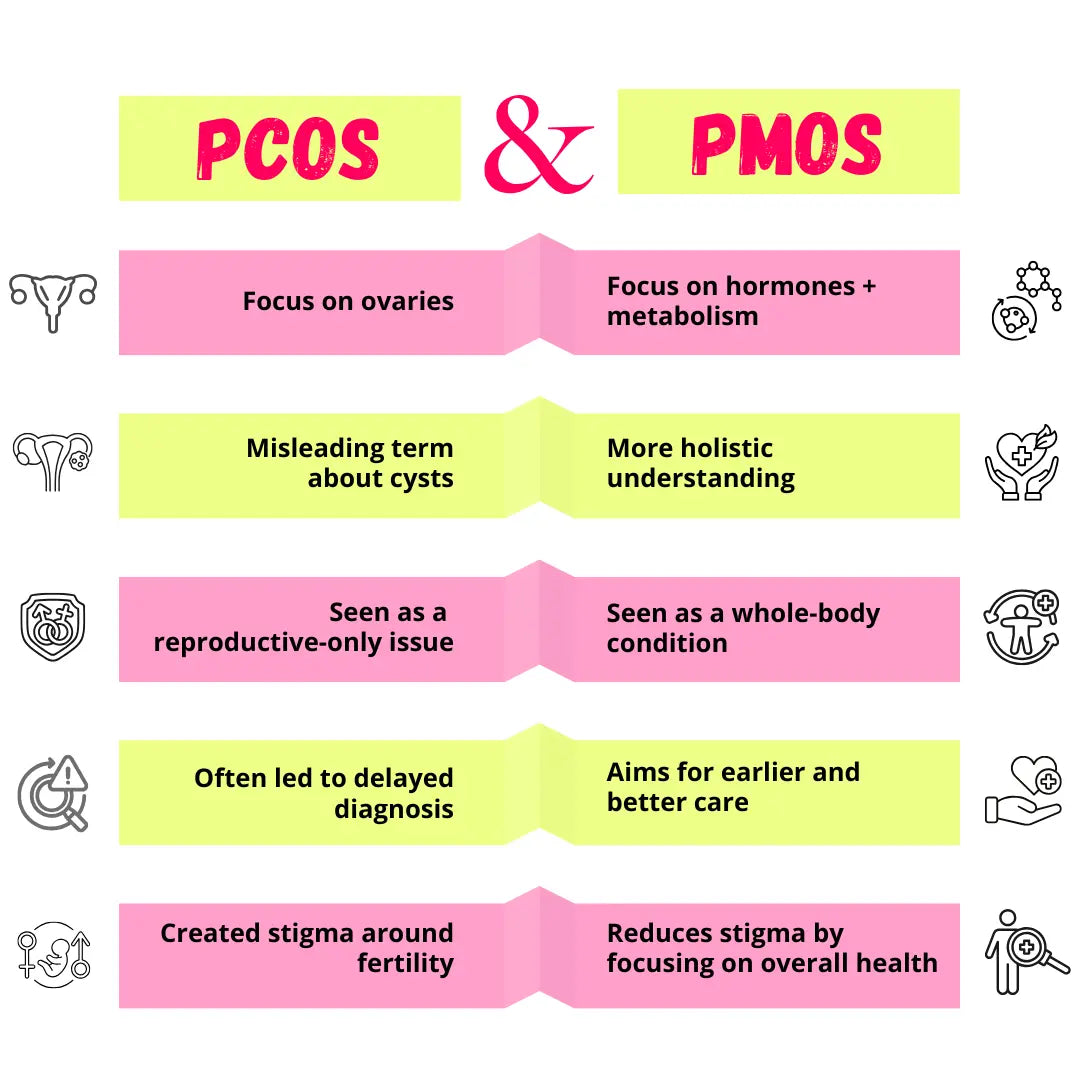
Problem associated with PCOS in medical terminology
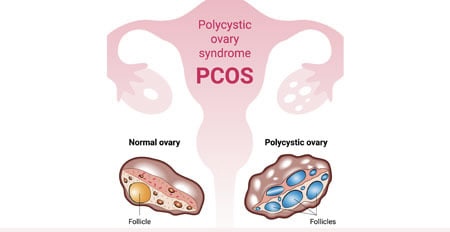
➜ This terminology mainly revolves around ovaries and cysts.
➜ But not every woman who has been diagnosed with PCOS has ovarian cysts.
➜ It is also something that is commonly misdiagnosed among women as health professionals mainly search for cysts as an identifying factor.
➜ Most of the women who experience most similar symptoms, such as irregular period cycles, breakouts, weight fluctuations, emotional overwhelm, and facing difficulty in getting pregnant, are usually informed that they don’t have PCOS, as there is an absence of cysts in their medical scans.
PMOS: What is it really about?
Let’s break its full form into more understandable parts.
➜ Polyendocrine: It contains the functioning of multiple hormones
➜ Metabolic: It is related to metabolism, insulin regulation, and weight control.
➜ Ovarian: It focuses on reproductive activity.
➜ Syndrome: It involves a combination of similar symptoms
➜ Such introduction of new terminology helps in better diagnosis and early intervention.
Impact of PMOS for Women’s Health
➜ Women were not able to get a clear understanding about their symptoms, as they think it is due to stress, body weight, and some fluctuation in their period cycle.
➜ PMOS helps doctors to focus more on hormonal changes and metabolic changes rather than reproductive organ issues such as ovaries.
➜ PMOS also recognizes emotional distress associated with this condition, such as anxious thoughts, negative self-image, stress, and mood swings.
➜ PMOS focuses not only on the issues associated with fertility, as it takes into consideration different factors that impact women’s wellness.
➜ PMOS supports women to build healthier everyday lifestyles, such as doing exercise, eating balanced meals instead of junk food, using better coping strategies, and improving sleep quality.
What doesn’t change between PCOS and PMOS?
➜ Women who are diagnosed with these conditions will have to go through inconsistent period cycles, pimples, haircare problems, and drastic weight changes.
➜ There is also a common treatment approach that can be applied to every woman, as every woman's experience is different based on subjective factors.
Conclusion
PCOS is a well-known health condition among women's reproductive systems that has made women physically and emotionally drained. Recently, a new terminology, PMOS, was introduced by healthcare professionals that focuses on different hormonal and metabolic factors rather than difficulties faced in the ability to conceive. Such new terminology also encourages women to focus on their mental well-being and physical fitness.