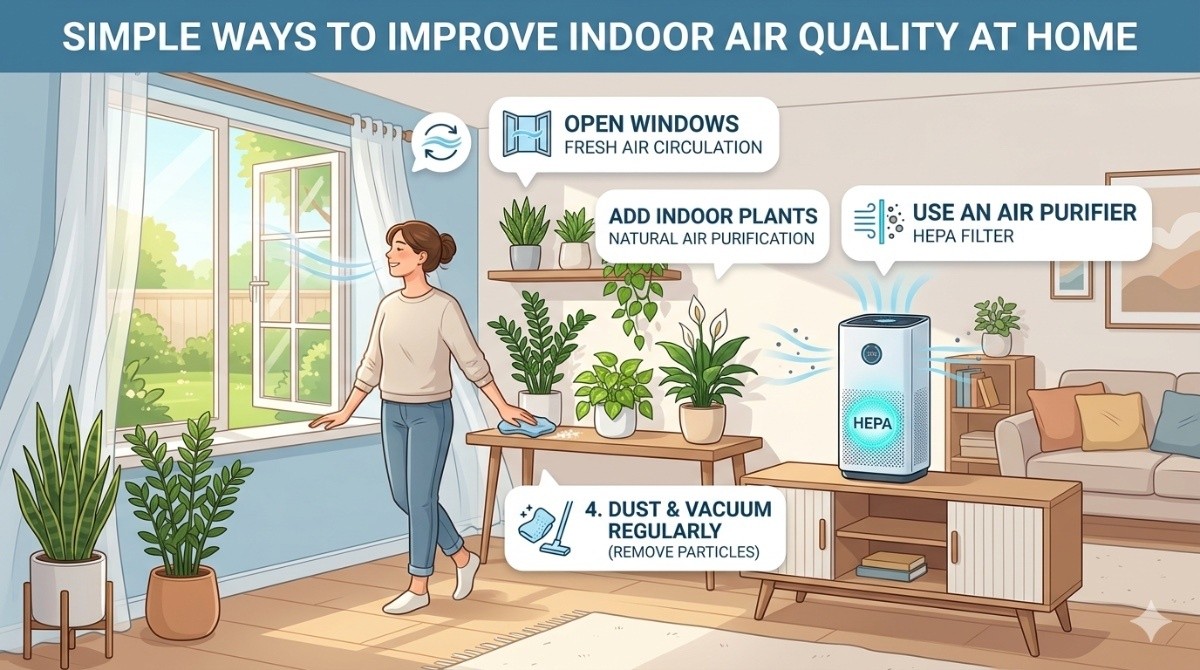
Our concept of staying healthy mostly revolves around eating healthy food, proper skincare, and maintaining physical fitness. But have you ever thought about the quality of air that surrounds us that may have an impact on our overall health? An interesting fact: Indoor air can be found to be more polluted, as it captures dust, smoke, and cleaning agents in one place. Improving air quality at home can be done easily without the requirement of complex, expensive equipment. Let’s go through some of the feasible ways to make changes in everyday lives that provide fresh air.
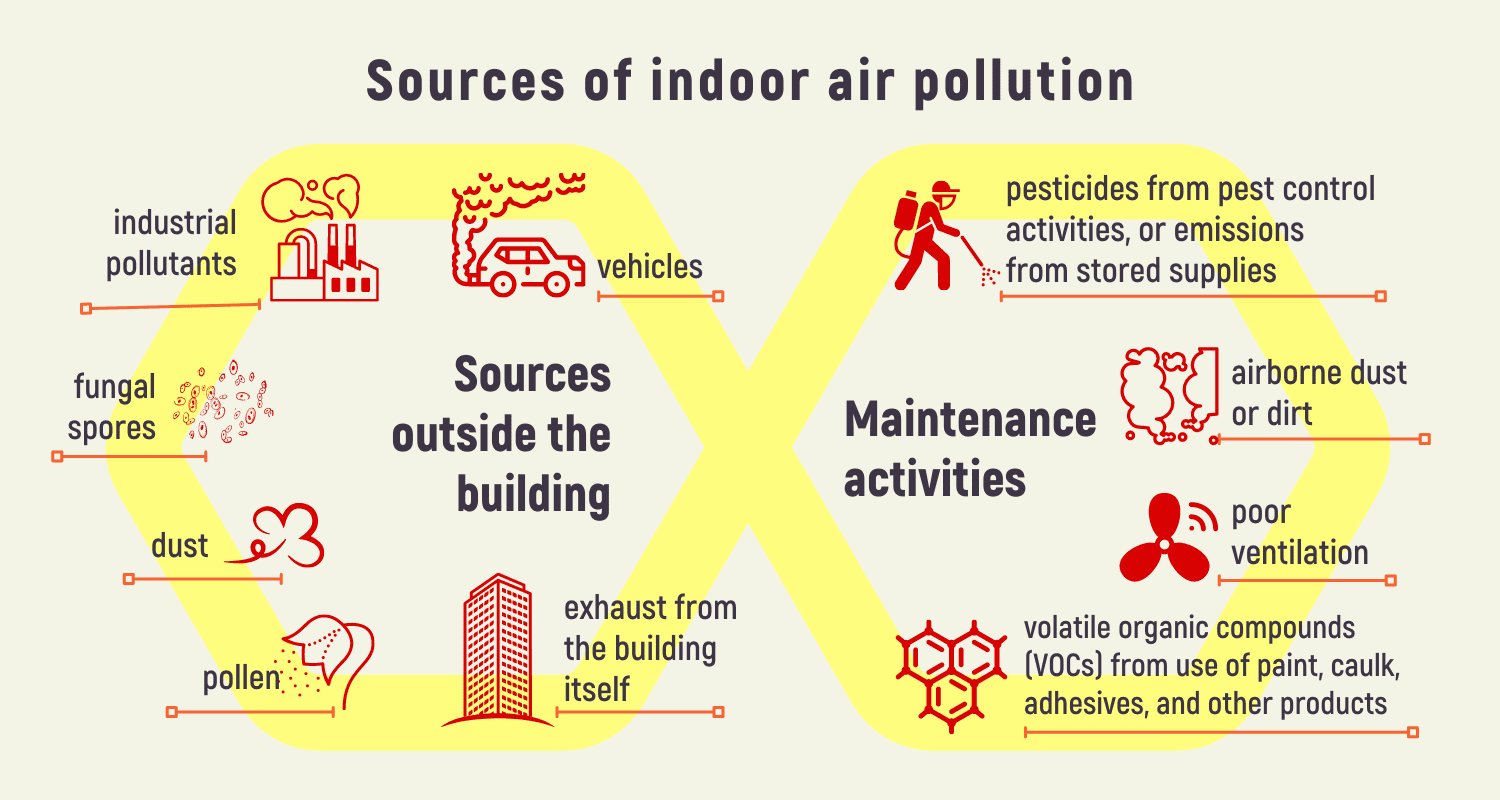
First Step: Check Your Air Quality
Ask a few questions related to your home environment.
◈ Do you observe dust levels increase instantly on the surface?
◈ Do you feel that your room has poor ventilation after being closed for a while?
◈ Do you often wake up with dizziness, allergic reactions, and mouth dryness?
◈ Do you feel cooking smells exist in the air for hours?
If your answer is YES to any of these questions, then you need to improve indoor air quality, which usually results in city houses where windows are mostly shut off.
The Power of Letting Fresh Air In
◈ Letting the windows open for 15-20 minutes can help fresh air to flow and reduce captured containments.
◈ Morning time is considered to be an appropriate time, as there is not much traffic pollution.
◈ A small amount of airflow can also make a big difference instead of keeping the window open all day.
◈ Pro tip: keeping windows open in two different rooms at the same time makes air pass through the entire house.
The Power of Plants for Fresh Air
◈ There are certain categories of plants that help to maintain fresh surroundings.
◈ Plants such as snake plant, areca palm, peace lily, and spider plant
◈ Such plants also increase moisture levels and provide serenity to indoor environments. 
Dust Isn’t Just Messy—It Affects Your Air
◈ Dust often consists of fine particles such as pollen, skin flakes, and fibers that spread in the atmosphere.
◈ It is suggested to use a wet cloth while cleaning surfaces.
◈ Weekly routine of washing bedsheets and pillow covers
◈ Removing dust from curtains and ceiling fans sometimes.
Watch Out for Strong Scents and Sprays
◈ Artificial scents that are discharged from air fresheners, fancy scented candles, and sprays tend to stay in the air for a longer duration, which can impact indoor air quality.
◈ It is suggested to ventilate the kitchen after using the kitchen, remove trash frequently, and put shoes near the entrance.
◈ During cooking, turn on the exhaust fan or chimney and keep windows open to reduce smoke and grease particles in the surroundings.
Declutter Your Space for Better Airflow
◈ A room that is overloaded with plenty of items stores dust and restricts air circulation.
◈ Quick task: choose any room and throw away unused items from cabinets or corners to make the room lighter and refreshed.
Conclusion
Indoor air quality tends to get affected the most as if there is a presence of dry air that can lead to throat congestion or humidity results in fungal growth. It is advised to allow sunlight through the room, avoid dry or wet clothes in large quantities, and keep curtains open for a certain duration.