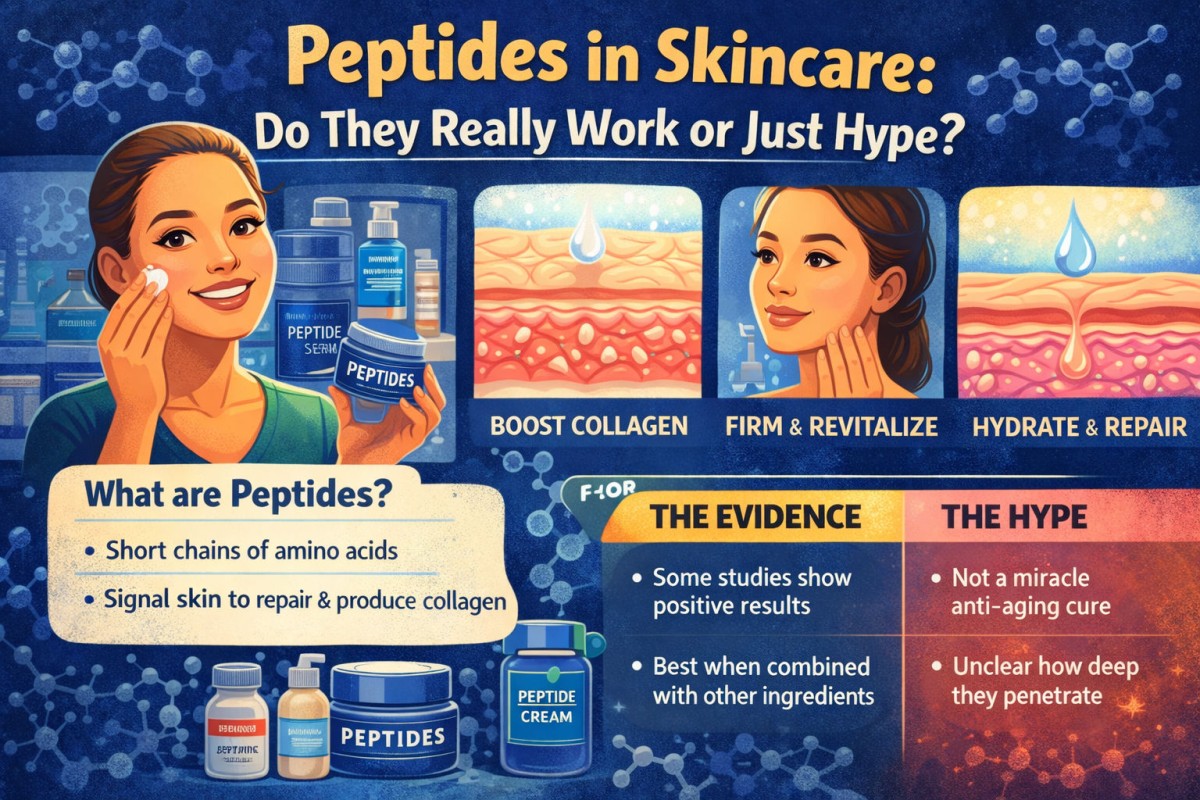
One of the most recognized ingredients that has been found in any skincare products is peptides, which includes wrinkle reduction serums and moisturizing creams promising enhanced skin elasticity and texture. Peptides are gaining popularity in skincare markets, which increases curiosity among the audience regarding their actual usefulness. It can be beneficial to understand about peptides, their working on skin types, and their effectiveness in regular routines.
Discover how niacinamide supports hydration and skin elasticity.
Role of Peptides in Skincare
★ Peptides are short-chain molecules of amino acids that comprise essential elements of proteins like collagen, elastin, and keratin, which help to keep a plump, refined, and radiant appearance. 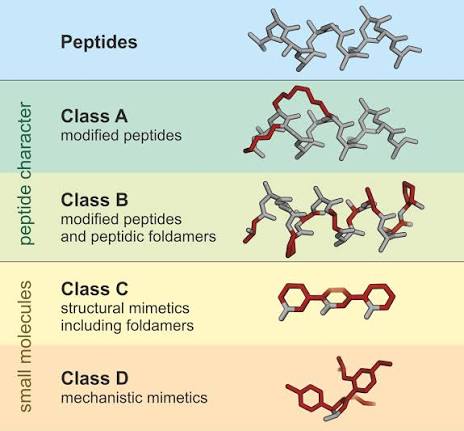
★ As aging occurs, collagen production decreases, which results in wrinkles, reduced skin tightness, and loss of firmness. It helps to encourage skin renewal.
★ It aids in reducing skin redness and irritation, promotes tissue regeneration, and stimulates collagen production. When it is applied gently on skin, peptides absorb into deeper layers of the skin and transmit a signal that promotes well-regulated skin activity. 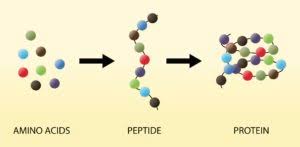
Different types of peptides
★ Single peptides assist in developing more collagen and elastin as they decrease wrinkles over time. 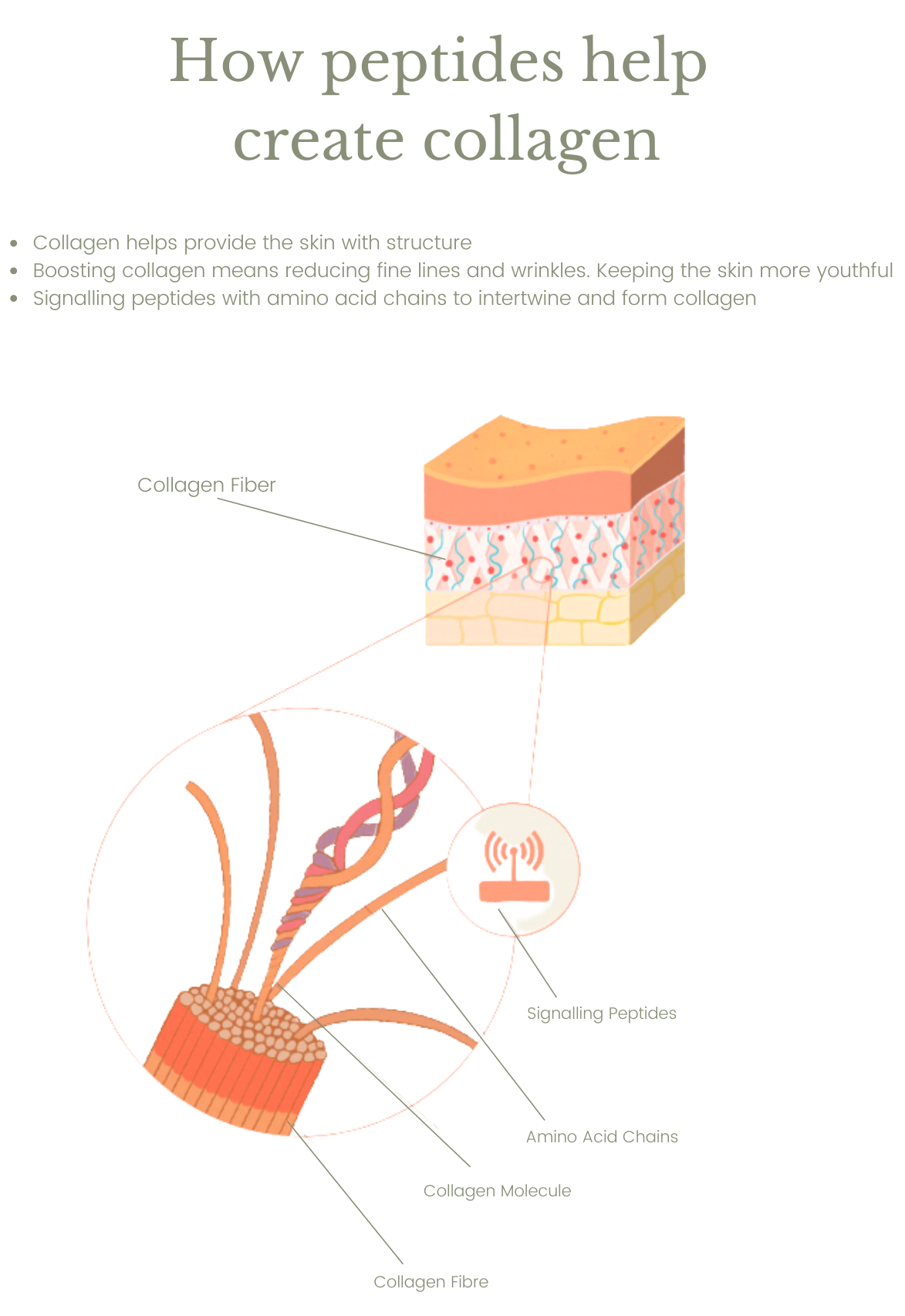
★ Carrier peptides provide necessary minerals such as copper that repair damaged skin.
★ Enzyme-inhibiting peptides help prevent collagen loss that supports skin structural integrity.
★ Neurotransmitter-inhibiting peptides release muscle tension in the face and diminish the appearance of expression lines. 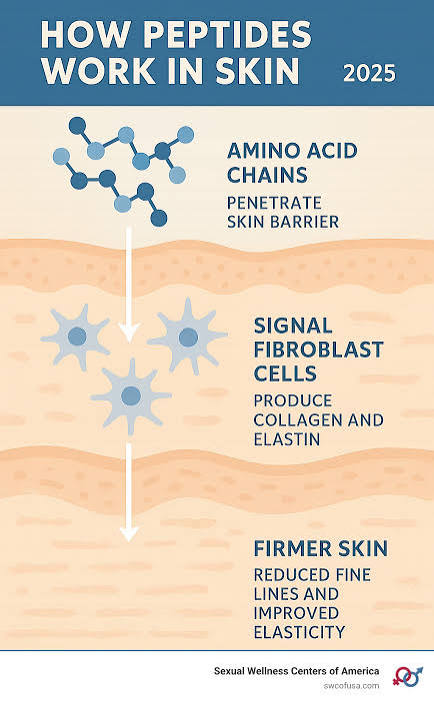
Facts about using peptides in skin care products
★ Peptides are helpful for people with sensitive skin types, as they provide better hydration retention.
★ Peptides tend to work effectively over longer periods of time and are found to be gentler, less harmful and more supportive than corrective ingredient.
★ Peptides function smoothly with other active compounds such as retinol that enhances cell growth and vitamin C for brightening skin texture.
★ Concentration and formulation of peptides are more important than its number. Peptides are mostly recommended for those with dry skin, facing early signs of aging and want some chemical-free radicals.
★ Peptides promise effective results for long-term skin health, and you can see improvements with consistent weeks of usage.
Find out if your skincare routine needs adjustment for better results.
Conclusion
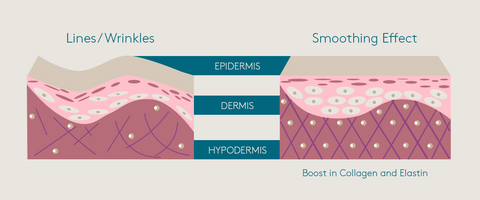
Peptides act as chemical messengers and control skin cells to perform activities such as more collagen production and skin repairing. Peptides have strong biochemical properties and increasing clinical effectiveness. Lifestyle factors such as sun exposure, hydration, diet, genetic predisposition, and skin care routine also contribute significantly to the overall skin health.