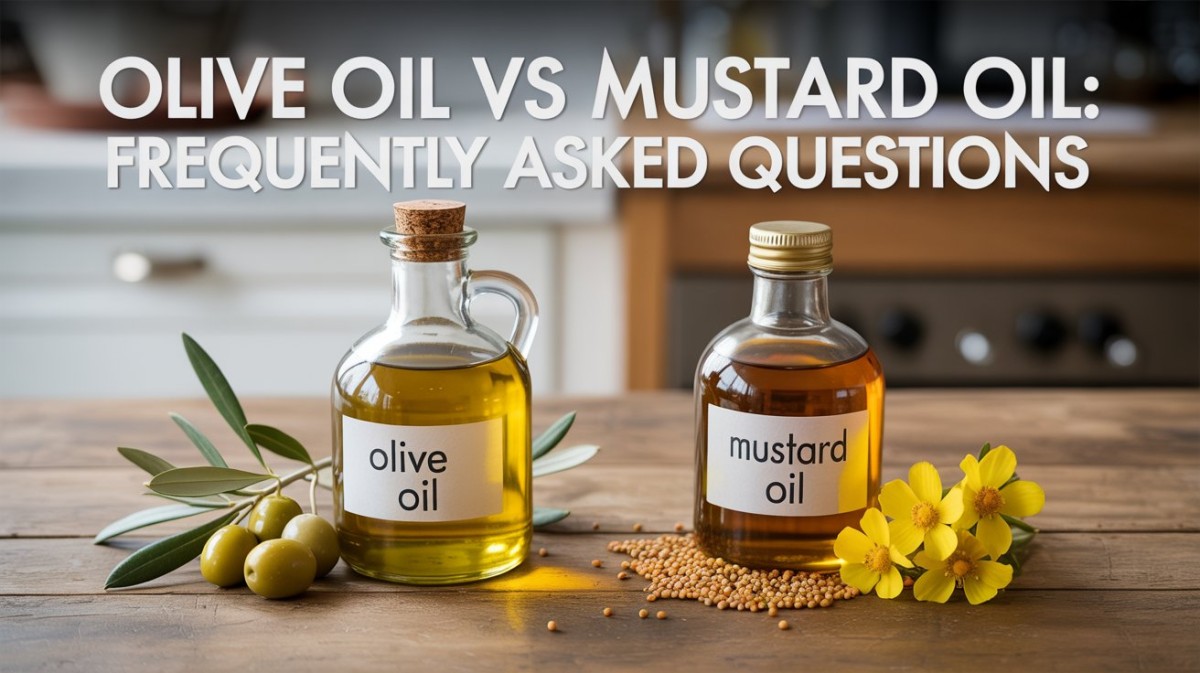
When it comes to a healthier diet, it starts with healthy cooking, and how does healthy cooking start? That's with the right cooking oil. So cooking oils play an important role in everyday nutrition. Two of the most commonly compared oils are olive oil and mustard oil. Both are popular for their health benefits, utilisation rates, and nutritional value. If you are constantly questioning yourself, which one is better, this FAQ blog answers the most common questions about olive oil vs mustard oil.
What is the difference between olive oil and mustard oil?
Both of these oils differ in terms of their source, flavour, and nutritional content. Olive oil is extracted from olives and is increasingly utilised in Mediterranean diets. It has a mild flavour and is rich in monounsaturated fats and antioxidants. On the other hand mustard oil is extracted from mustard seeds. It has a strong aroma and pungent taste and is commonly used in Indian cooking. Both oils are suitable for different types of cooking styles and cuisines.
Which is healthier: olive oil or mustard oil?
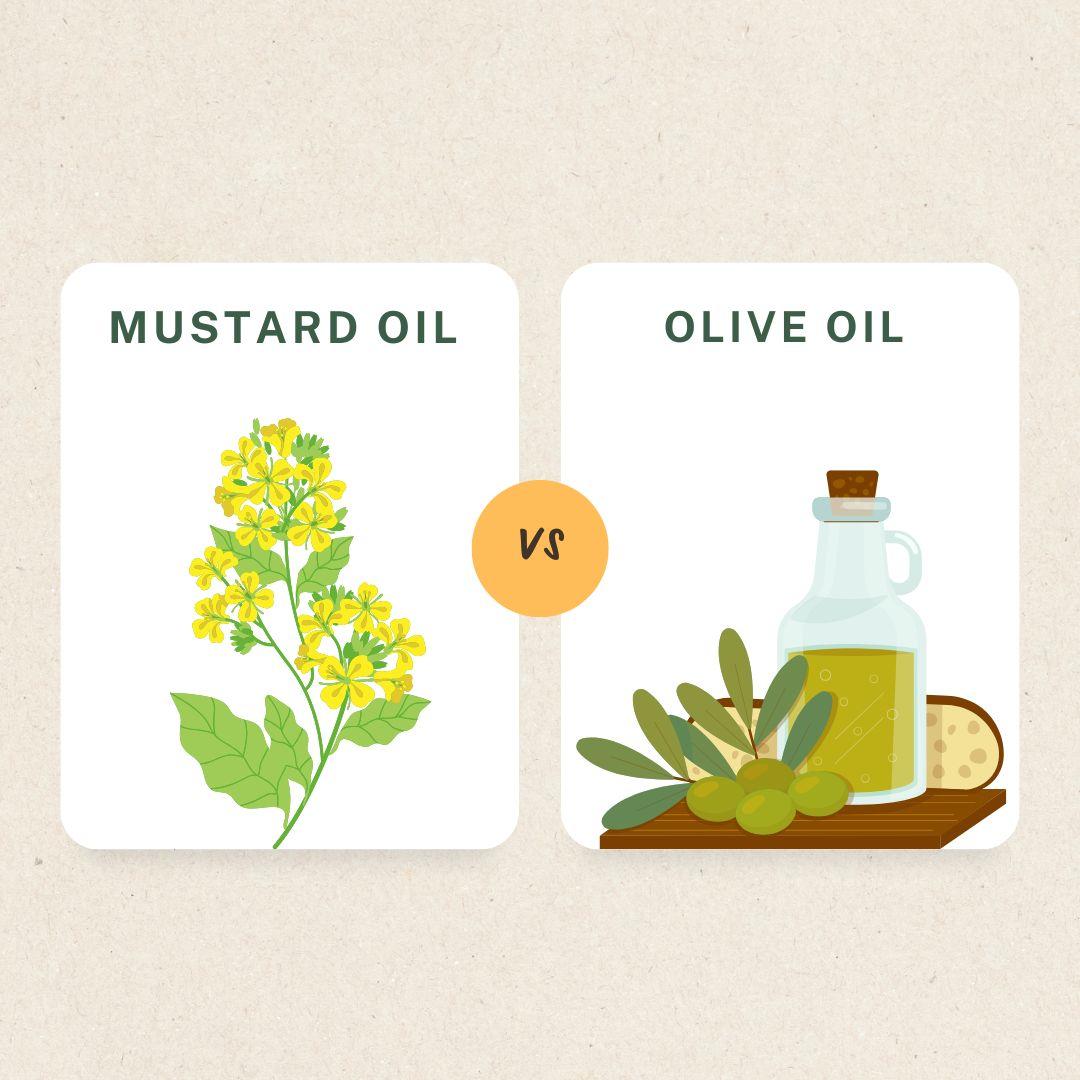 Well, there is no straightforward answer for this because both of these oils offer different health benefits. Olive oil is higher in antioxidants and monounsaturated fats that promote good heart health, while mustard oil contains omega-3 fatty acids and also has antibacterial properties. It all depends on your cooking needs and dietary preferences as to which option is better for you.
Can olive oil replace mustard oil in Indian cooking?
Olive oil can be substituted for use in Indian cuisine. The way your food will taste depends on what type of cooking oil you use, and since mustard oil has a much more intense flavour than olive oil, the flavour of the dish will most likely differ slightly. Many of the traditional foods you see cooked in India call for the use of mustard oil as part of their authentic flavour profile (pickles, curries, and various regional dishes).
Is mustard oil healthier than olive oil for cooking?
Mustard oil is an ideal oil for cooking at high temperatures because it has a higher smoke point. Olive oil (particularly extra virgin olive oil) works well when used in salads, for very light sautéing and frying, and frequently when cooked over a low to medium flame.
Which oil is better for heart health?
 Research states that both olive oil and mustard oils can support heart health in certain aspects. Olive oil helps reduce bad cholesterol due to the presence of monounsaturated fats, such as oleic acid, whereas mustard oil consists of omega-3 fatty acids that help maintain healthy cholesterol levels.
Which oil is better for weight loss: olive oil or mustard oil?
The most debated question,tion both online and offline, both olive oil and mustard oil can support weight management if you are having it in moderate amounts. Olive oil consists of healthy fats that promote satiety and help control hunger. Mustard oil may help stimulate metabolism and improve digestion. But both of these oils are high in calories, portion needs to be maintained.
Is mustard oil safe for daily consumption?
Yes, mustard oil is generally safe for daily consumption,tion but as mentioned earlier, you need to consume it in moderate amounts. It contains beneficial fatty acids and natural compounds that may support heart health, digestion, and immunity.
Which oil contains more nutrients: olive oil or mustard oil?
Nutrient |
Olive Oil |
Mustard Oil |
|---|---|---|
| Calories | 880 kcal | 884 kcal |
| Total Fat | ~100 g | 100 g |
| Saturated Fat | ~14.5% (Palmitic 13%, Stearic 1.5%) | 11% |
| Monounsaturated Fat (MUFA) | ~70% (Oleic acid) | 59% |
| Polyunsaturated Fat (PUFA) | ~15.5% (Linoleic 15%, Alpha-linolenic 0.5%) | 21% |
| Omega-3 (Alpha-linolenic acid) | 0.5% | Present inthe PUFA portion |
| Omega-6 (Linoleic acid) | 15% | Part of PUFA |
| Smoke Point | 190–215°C (extra virgin) | ~250°C |
| Melting Point | −6°C | ~−10°C to −20°C (approx.) |
Can you use both olive oil and mustard oil in your diet?
Yes, using different types of healthy oils can provide a wider range of nutrients. Most of the dieticians recommend rotating oils in your diet instead of relying on just one type. Therefore, fore using both olive oil and mustard oil in moderation can help balance flavour, and with your cooking needs.
Is mustard oil good for skin and hair?
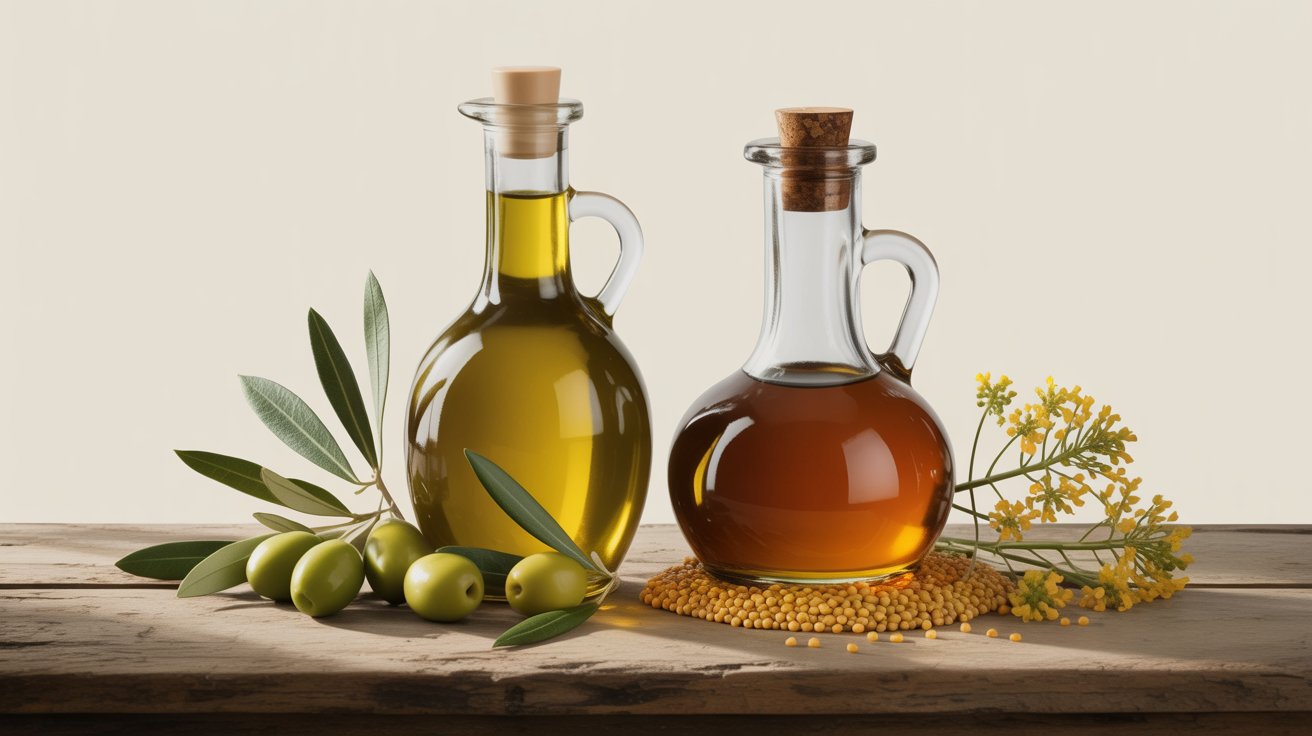 Yes, mustard oil is identified as beneficial for both skin and hair due to its rich nutrient content. It contains vitamin E, omega-3 fatty acids, and antioxidants that help nourish the scalp as well as protect the skin.
For hair, mustard oil improves blood circulation in the scalp, which has a higher capacity to promote healthier hair growth and strengthen hair roots. It is commonly used for head massages and hair treatments to help reduce dryness and improve hair texture.
In terms of skin, mustard oil helps moisturise dry skin and protect it from any type of environmental damage. The oil has natural antibacterial and antifungal properties, which may help maintain healthy skin. When used regularly in moderation, mustard oil can be a natural way to support stronger hair and healthier skin.
Conclusion
Therefore, in the comparison of olive oil and mustard oil, both of them are proven to have impressive health benefits. Instead of always opting for just a single one, you can incorporate both into your diet plan and that can help you enjoy their flavours and nutritional advantages.