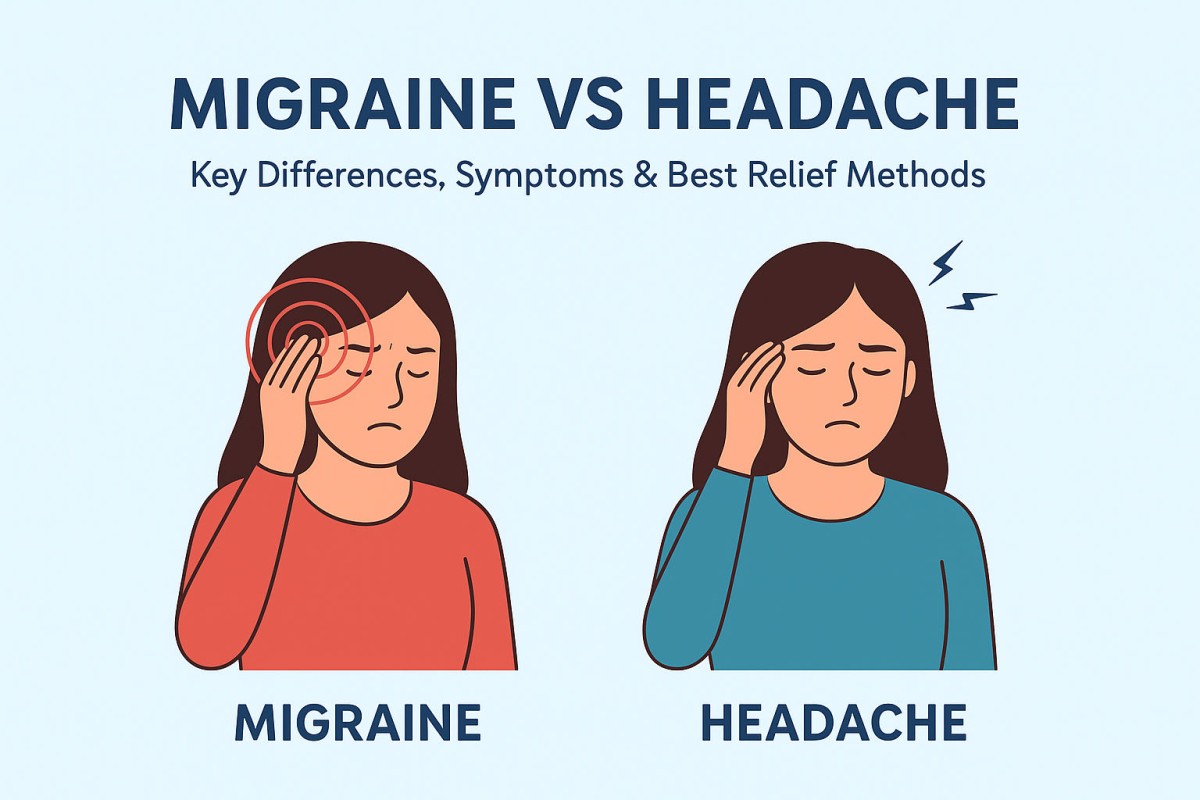
Many people find it difficult to understand the difference between a headache and a migraine, which can be considered common health issues affecting people of different age groups and backgrounds. Headaches mostly occur due to stressful situations, sleep disturbances, and dehydration. Migraine is found to have an intense impact and serious issues that affect everyday activities. It is essential to know about underlying symptoms, causes, and effective treatment options for both conditions.
An Overview of Headaches
1. It is a general description of pain and uneasiness in the head, scalp, or neck. Headaches range from mild to moderate and can occur due to a variety of factors, such as tension, degradation, and sinus rhythm.
2. Tension headaches can be associated with a tight band around the head that develops due to physical strain and stressful situations.
3. Cluster headaches are a type of intense, targeted pain particularly revolving around one eye.
4. Sinus headaches typically result from sinus infections.
5. Symptoms may include rigidity around the forehead or back of the head, stomach unease leading to vomiting, and such early signs can be improved with proper rest and prescribed medications.
6. Headaches can be effectively prevented by resting in a dark room to avoid triggering sensations, keeping oneself hydrated, having easily available pain medications, carrying out relaxation techniques like yoga or mindfulness meditation, and adopting good posture. 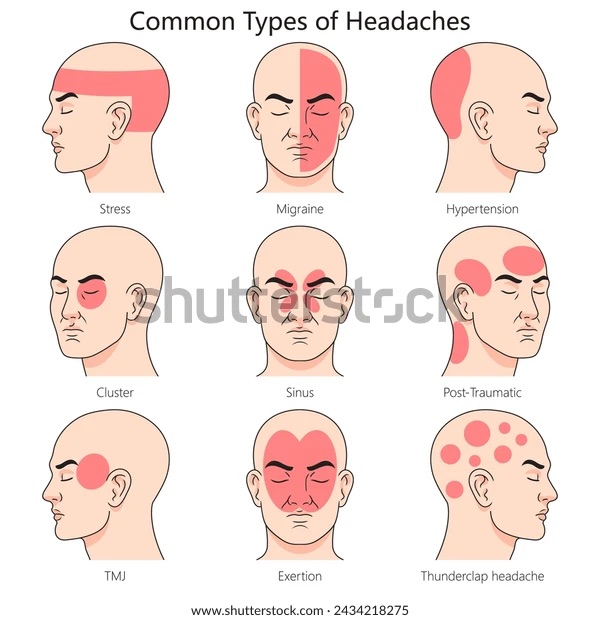
Migraines: What Are They Really?
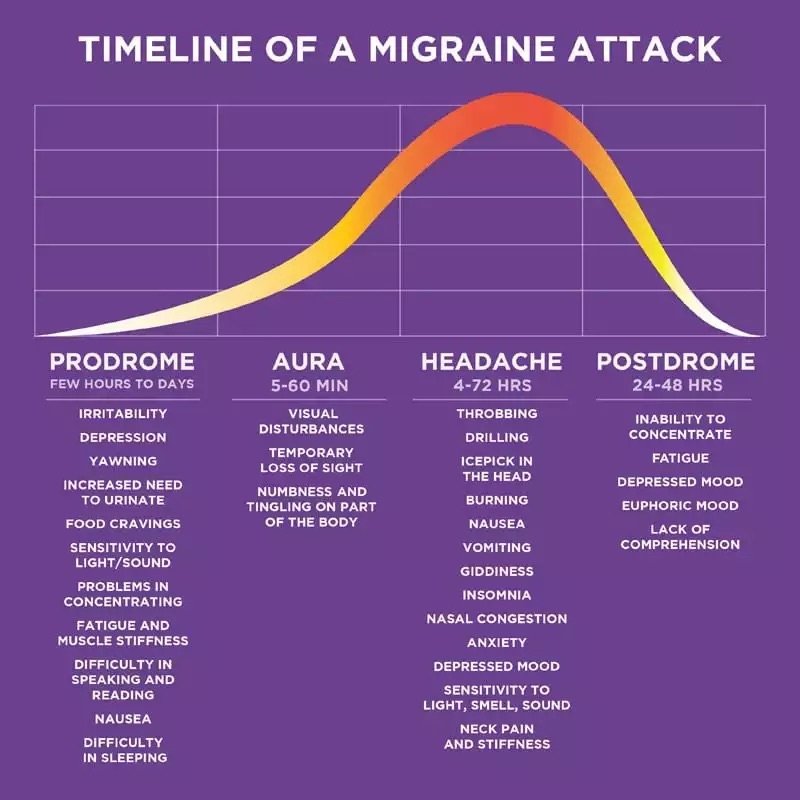
1. It is a condition affecting the brain or nerves followed by painful and overwhelming headaches that can last from hours to days and affect one’s ability to function normally in daily activities. They are considered to make changes in brain function and nerve signaling.
2. Migraine symptoms consist of moderate to severe recurrent pain on one side of the head, trouble tolerating bright lights and loud sounds, experiencing visual disruptions from flashing lights or blind spots, dizziness, and shrugging to stay focused.
3. Migraine can occur due to shifts in hormone levels for women, particular foods and drinks such as coffee, alcohol consumption, fermented cheese, stressful situations, sleep deprivation, external stimuli, and environmental conditions such as weather changes.
4. Migraine treatment involves preventive medications that have been prescribed by medical professionals, maintaining a diary or journal to pinpoint and minimize exposure to known triggers, taking an appropriate amount of sleep and balanced meals, pressing a cold pack to the forehead or neck for pain relief, hydrating oneself, practicing coping techniques for stress like biofeedback and light exercise, and consulting professional experts for diagnosis and recovery.
Conclusion
Headaches and migraines are kind of overlapping health issues that require proper attention with effective treatment. If both of these conditions start to interfere with daily functioning, and when headaches are accompanied by sudden headaches, exhaustion, difficulty with speech and comprehension, and having a high temperature alongside neck rigidity that necessitates medical care. Migraine aura that lasts for 30-60 minutes and includes loss of sensation in hands or face and difficulty speaking properly.