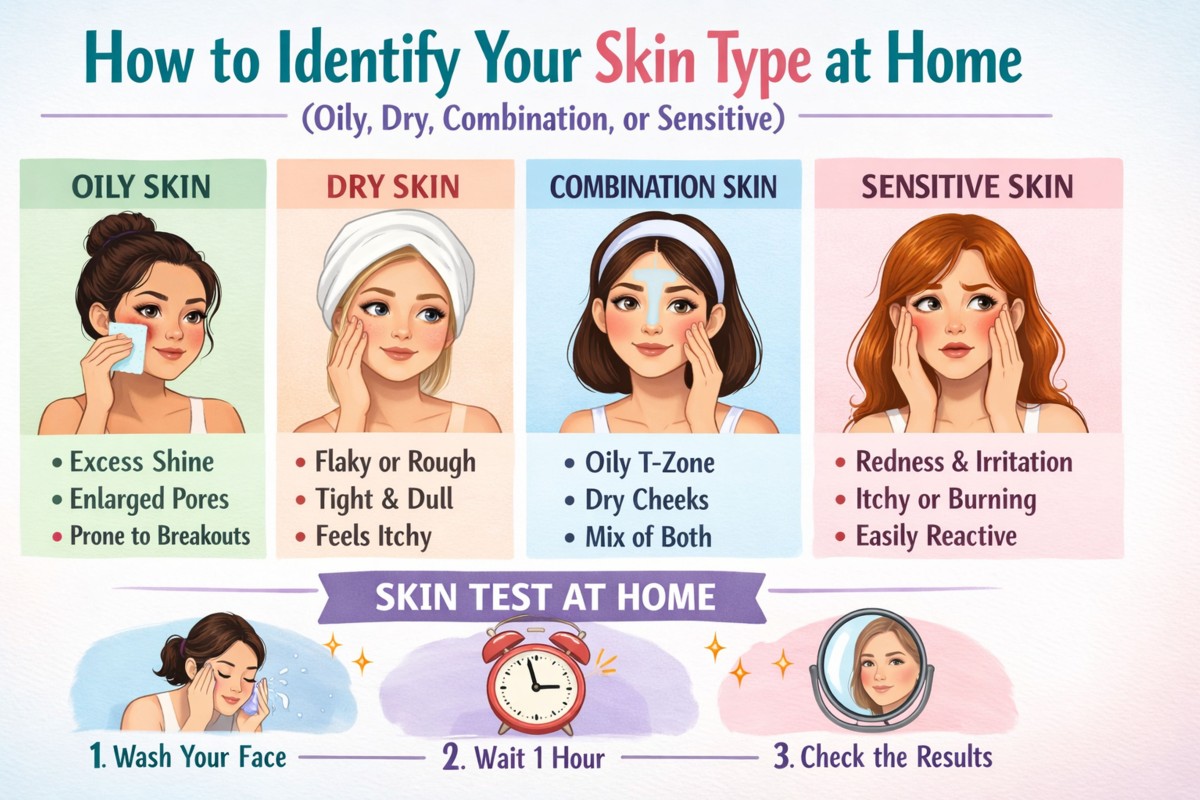
There are different types of skin types that are essential to understand, as it helps to develop a result-driven skin care routine. Using inappropriate skincare products can cause pimples, skin dehydration, and excessive oil production. There are few home-based tests and early signs to observe that assist in recognizing whether the concerned skin type is oily, dry, combination, or sensitive.
Why Is Knowing Your Skin Type Important for Skincare?
☆ A particular skin type decides how the skin responds to different products, climatic conditions, and lifestyle choices.
☆ Understanding the correct skin type ensures that products function effectively, reduces sensitivity issues, and supports optimal skin barrier function. 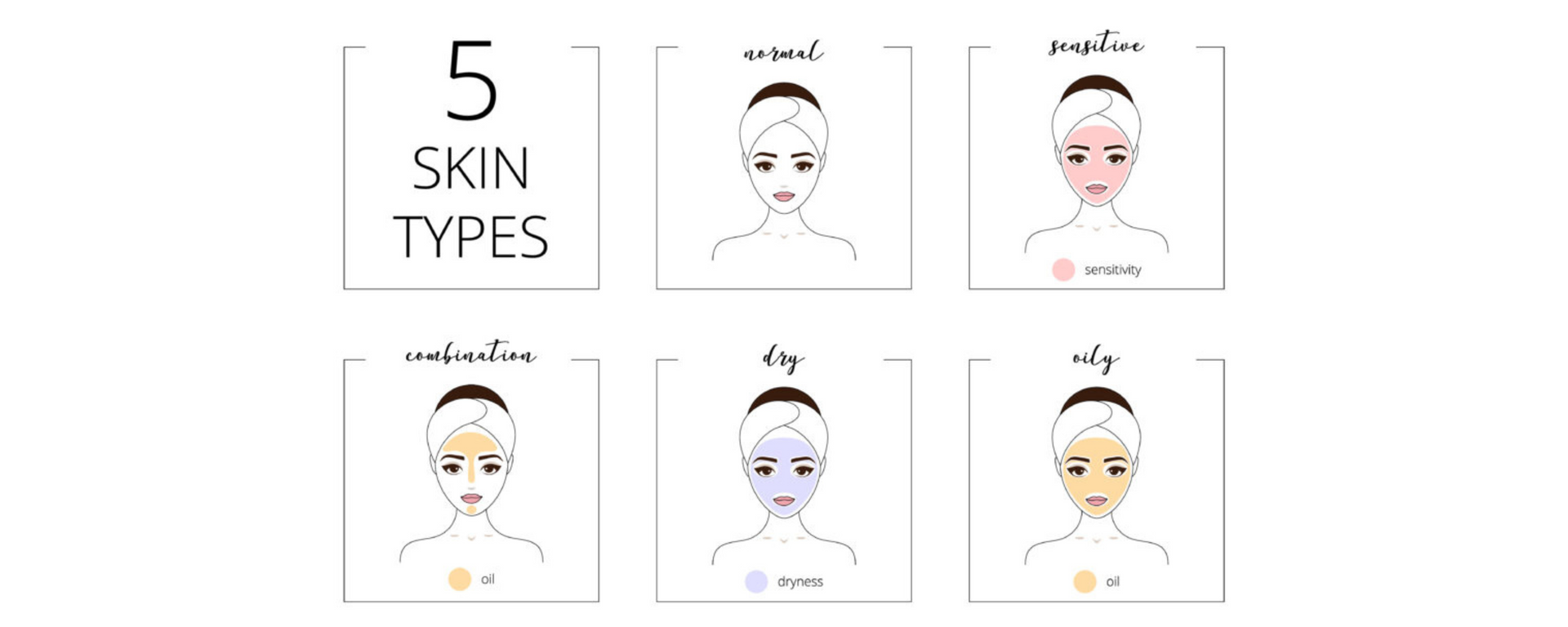
The Bare Face Test: An Effective Home-Based Test
☆ Firstly, it begins with washing the face using everyday face wash with no chemical ingredients.
☆ Let the skin dry, and do not apply any product.
☆ Set a timer for 30 to 60 minutes to observe how the skin appears and feels.
☆ If the face appears radiant, particularly on the forehead, nose, and chin, that can be interpreted as having oily skin.
☆ Dry skin types may feel skin to be uneven, having rough patches and being tight.
☆ Combination skin types have oily skin on the forehead, nose, and chin with normal to dry cheeks.
☆ Normal skin may feel calm, nourished, and well regulated with no excessive oil or dryness.
The Blotting Paper Test
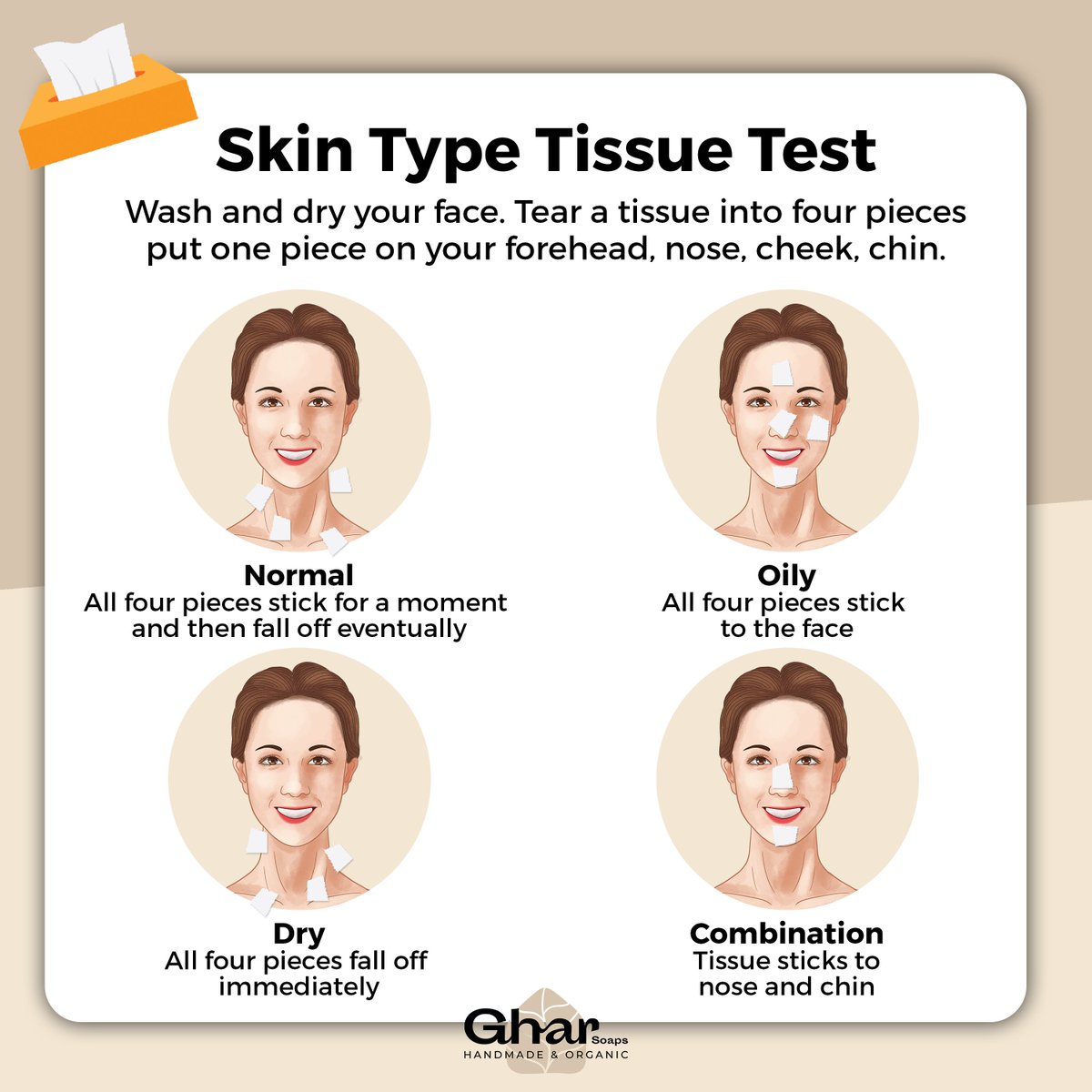
☆ This method begins with gently applying blotting paper on different surfaces of the face and viewing it under a light source.
☆ Those with oily skin types will experience oil marks on most areas; dry skin will feel little to no oil; combination skin will encounter oil specifically from the T-zone; and normal skin will go through small amounts of oil that are evenly distributed. 
How to identify oily skin type?
☆ The skin produces excessive skin’s natural oil, provides a greasy texture, has noticeable pores, and has common complaints of experiencing pimples and blackheads.
☆ Oily skin doesn’t let makeup stay for a longer duration and is most likely to benefit from products that have a weightless, gel-based formula and non-comedogenic products that maintain oil production without removing natural moisture. 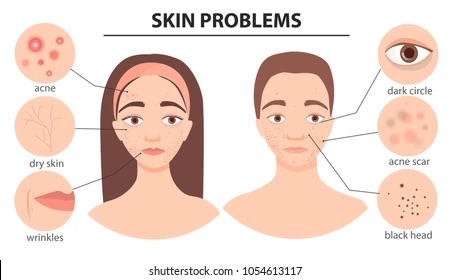
Dry Skin: Common Signs and Symptoms
☆ The skin feels dehydrated and stiff, experiences surface peeling, has reduced brightness, and light wrinkles may become visible.
☆ Such dry skin requires moisture-rich creams, chemical-free face washes, and products that are packed with ceramides and hyaluronic acid. 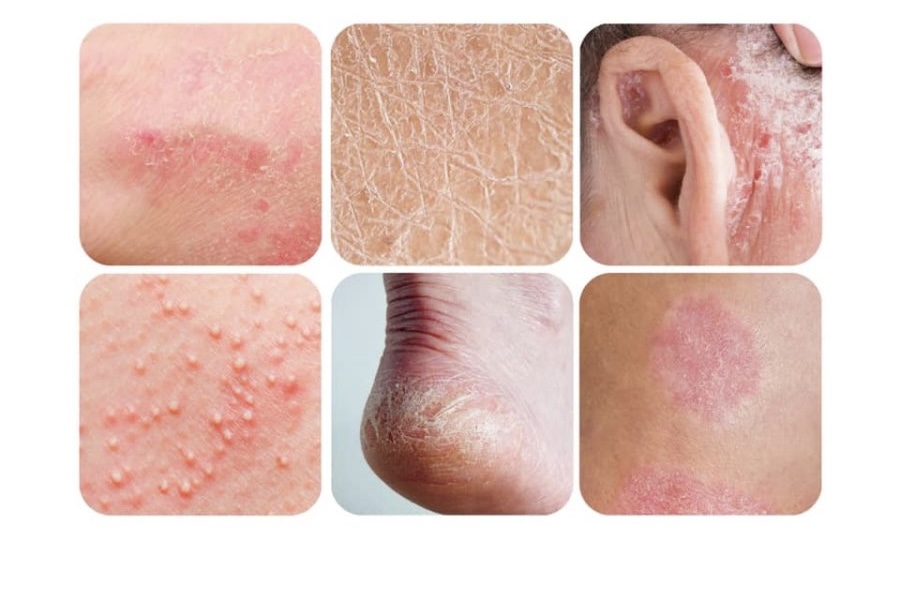
Understanding the Signs of Sensitive Skin
☆ Sensitive skin experiences redness, stinging sensations, persistent sensitivity and discomfort, and allergic reactions from strong scents and products with active ingredients.
☆ Sensitive skin requires products that have calming properties, such as aloe vera, centella asiatica, and oat extract. 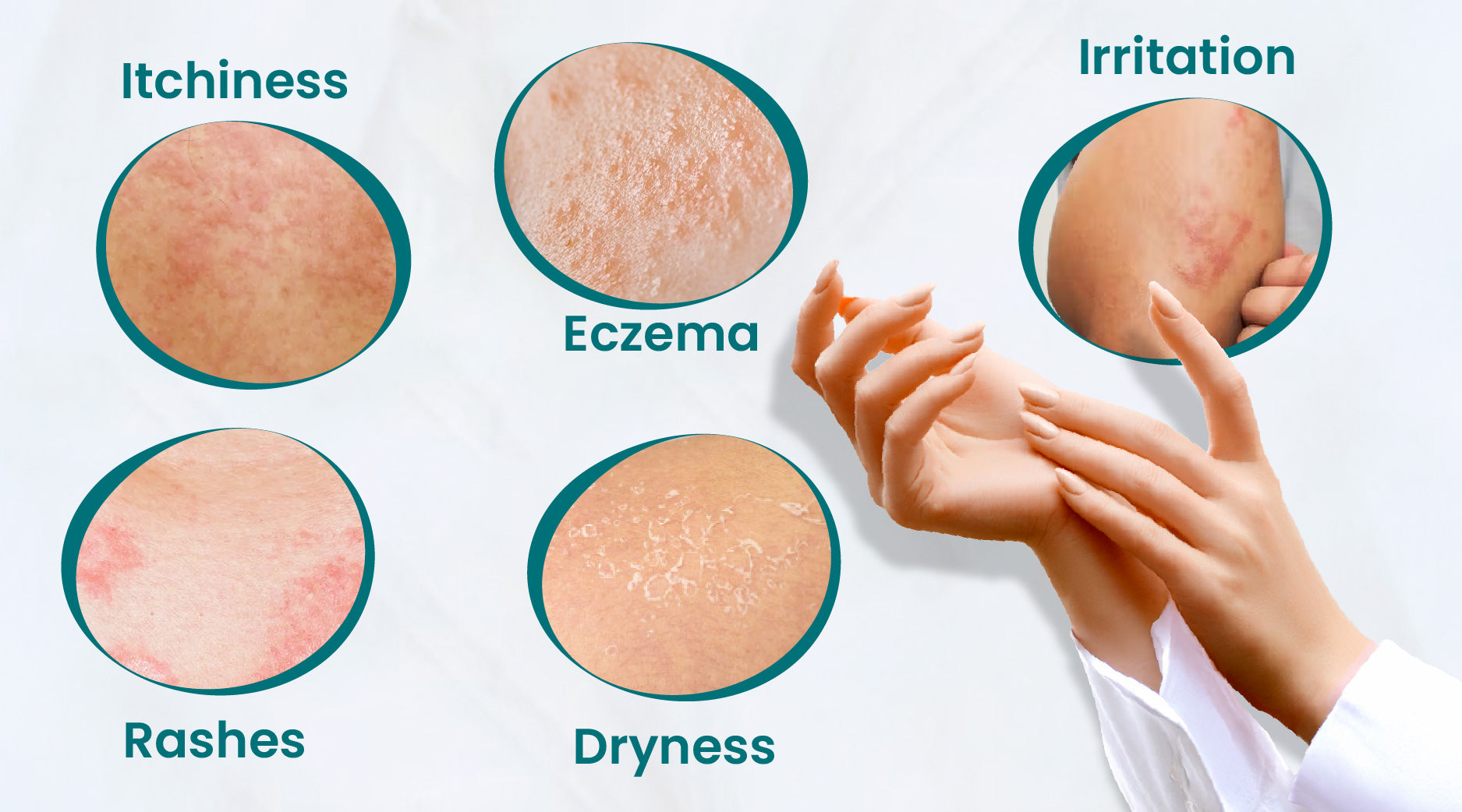
Extra Facts You Should Know About Skin Types
☆ The skin types may vary based upon different factors such as age, hormonal levels, climatic conditions, stress tolerance, and usage of excessive active ingredients.
☆ It is essential to differentiate between dehydration and dry skin and acne and oily skin, as it can be done by immediately testing skin after a face wash or using harsh cleansers. 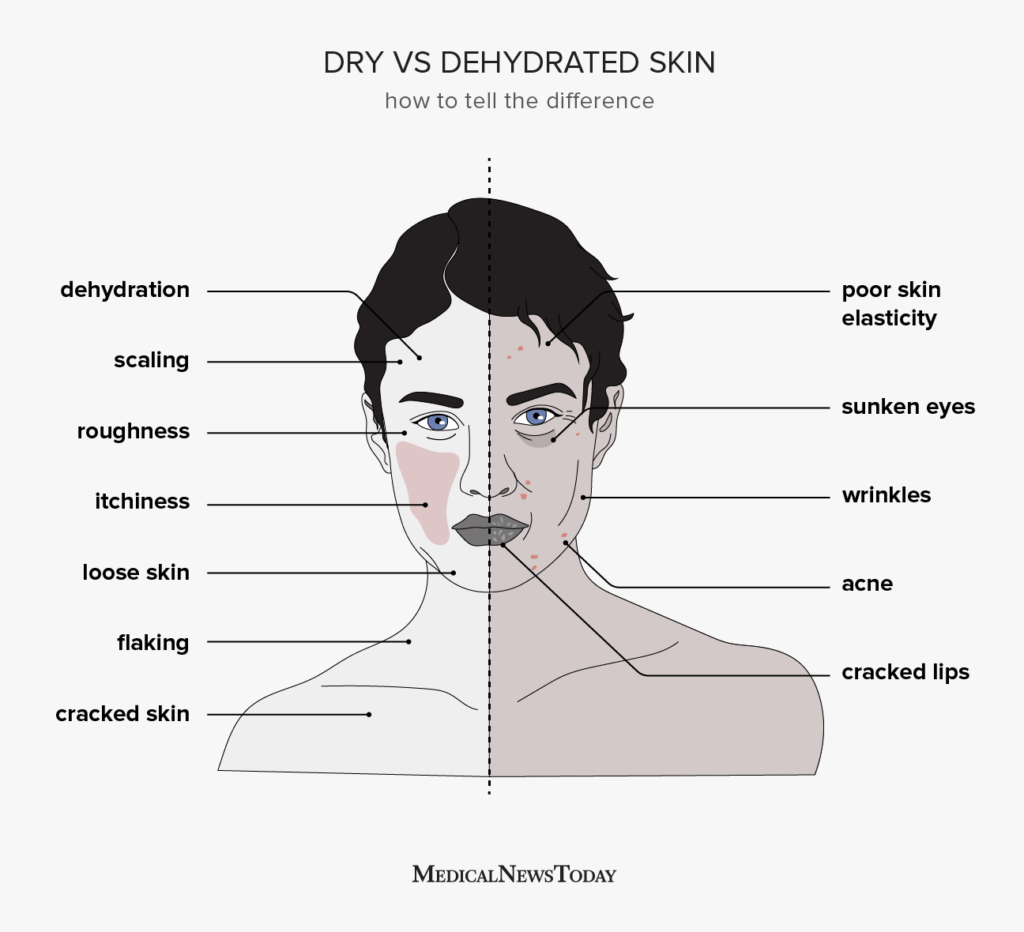
Conclusion
Skin type helps to determine the suitable products depending upon their formulation and usage. Identifying skin type can be done by gently cleansing the face and waiting for 30-60 minutes to observe any reactions and using blotting paper under a clear light source to see the amount of oil visible on the surface. There are many factors that affect the skin sensitivity, and some of the facts need to be understood for better identification of the appropriate skin type.