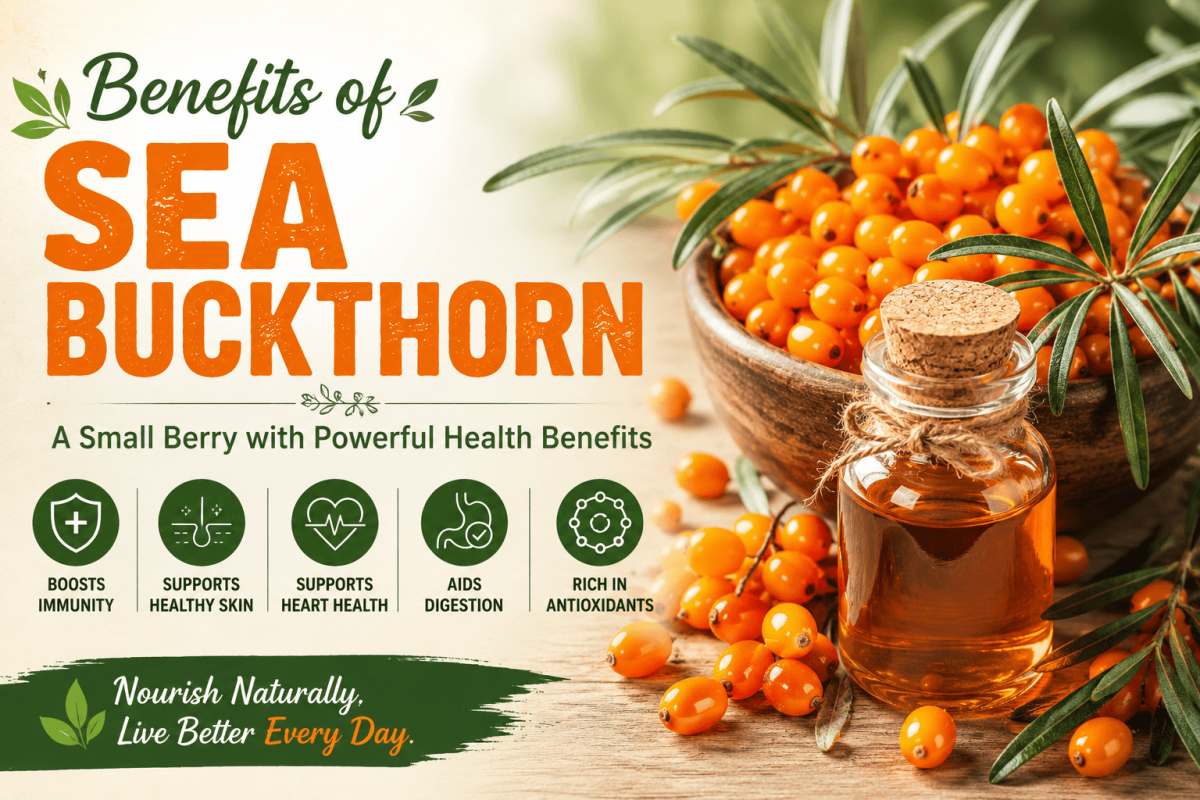
Sea buckthorn is a bright orange berry that grows on the sea buckthorn shrub, which mainly thrives in cold and mountainous areas of Asia and Europe. Often called a nutrient-rich superfruit, sea buckthorn has been used for centuries and is now getting attention for its impressive nutrition.
The berries are full of vitamins, minerals, antioxidants, healthy fatty acids, and other plant compounds that can support overall health. Sea buckthorn comes in various forms, such as fresh or dried berries, juice, powder, and oil.
What Makes Sea Buckthorn Nutritious?
Sea buckthorn is unique because it contains a mix of nutrients that are rarely found together in one fruit. It offers vitamin C, vitamin E, carotenoids, flavonoids, and various other bioactive compounds.
Sea buckthorn oil is also special because it has omega-3, omega-6, omega-7, and omega-9 fatty acids. Omega-7, in particular, is not commonly found in plant-based foods, making sea buckthorn oil popular in wellness and skincare products.
1. Supports Immune Health
Sea buckthorn berries are naturally rich in vitamin C and antioxidants. Vitamin C is important for normal immune function and helps protect cells from oxidative stress.
Including nutrient-rich foods like sea buckthorn in a balanced diet can provide overall nutritional support for the immune system.
2. Rich in Antioxidants
One major benefit of sea buckthorn is its high antioxidant content. Antioxidants help shield cells from oxidative stress caused by unstable molecules known as free radicals.
Sea buckthorn contains compounds such as carotenoids, flavonoids, vitamin C, and vitamin E. A diet rich in natural antioxidants can support general health and cellular protection.
3. May Support Healthy Skin
Sea buckthorn is popular in skincare due to its combination of antioxidants and fatty acids.
Sea buckthorn oil has omega fatty acids, vitamin E, and carotenoids that can help support the skin barrier and retain skin moisture. It is commonly included in facial oils, creams, and other cosmetic products.
However, skincare benefits can vary from one person to another, and cosmetic products should be used as directed.
4. Provides Healthy Fatty Acids
Sea buckthorn oil is an interesting source of several fatty acids, including omega-3, omega-6, omega-7, and omega-9.
These fatty acids play different roles in the body and are important parts of a healthy diet. Omega-7, also known as palmitoleic acid, is particularly associated with sea buckthorn and has contributed to its rising popularity.
5. May Support Cardiovascular Health
Sea buckthorn has antioxidants and unsaturated fatty acids that researchers are studying for their potential role in cardiovascular health.
Some studies suggest that sea buckthorn compounds might affect aspects like blood lipid levels and vascular function. However, more high-quality human research is necessary to draw strong conclusions about its cardiovascular benefits.
A healthy diet, regular exercise, maintaining a healthy weight, and avoiding tobacco remain essential for cardiovascular health.
6. Supports Digestive Health
Sea buckthorn berries contain dietary fiber, which is important for normal digestion. Getting enough fiber can promote regular bowel movements and support a healthy gut.
Sea buckthorn juice, powder, and whole berries can vary widely in fiber content, so the nutritional benefits depend on the form consumed.
7. May Help Support Eye Health
Sea buckthorn contains carotenoids, including beta-carotene and other antioxidant compounds. Carotenoids are vital for a healthy diet, and some help maintain normal vision.
Incorporating a variety of colorful fruits and vegetables into your diet is generally a good way to get a wide range of carotenoids and other helpful plant compounds.
8. May Support Overall Nutritional Wellness
Sea buckthorn is a nutrient-dense fruit that can add variety to a balanced diet. Its combination of vitamins, antioxidants, fatty acids, and plant compounds makes it a good addition to smoothies, juices, powders, and other foods.
Instead of viewing sea buckthorn as a cure or treatment for specific issues, it's better to see it as just one part of a healthy eating pattern.
How Can You Consume Sea Buckthorn?
Sea buckthorn is available in several forms:
- Fresh berries: Can be eaten when in season, though their natural tart flavor might be strong for some
- Juice: Often mixed with other fruits or used in drinks.
- Powder: Can be added to smoothies, yogurt, or other foods.
- Oil: Commonly found in dietary supplements and skincare products.
- Dried berries: Can be added to various foods and recipes.
Since products can vary in concentration and added ingredients, it's important to follow the manufacturer's serving suggestions.
Are There Any Side Effects?
Sea buckthorn is usually consumed as a food, but concentrated supplements and oils may not suit everyone. Some individuals might experience digestive discomfort or other reactions.
If you take regular medications, are pregnant or breastfeeding, or have a health condition, it’s best to consult a healthcare professional before using concentrated sea buckthorn supplements.
Final Thoughts
Sea buckthorn is a fascinating fruit due to its mix of vitamin C, antioxidants, carotenoids, dietary compounds, and healthy fatty acids. Possible benefits include supporting immune function, skin health, antioxidant protection, digestive health, and overall nutritional wellness.
However, sea buckthorn should complement, not replace, a balanced diet and healthy lifestyle. More human research is still needed to confirm the effectiveness of concentrated sea buckthorn products for specific health issues.
When included as part of a varied and balanced diet, sea buckthorn can be a nutritious and flavorful addition to your wellness routine.