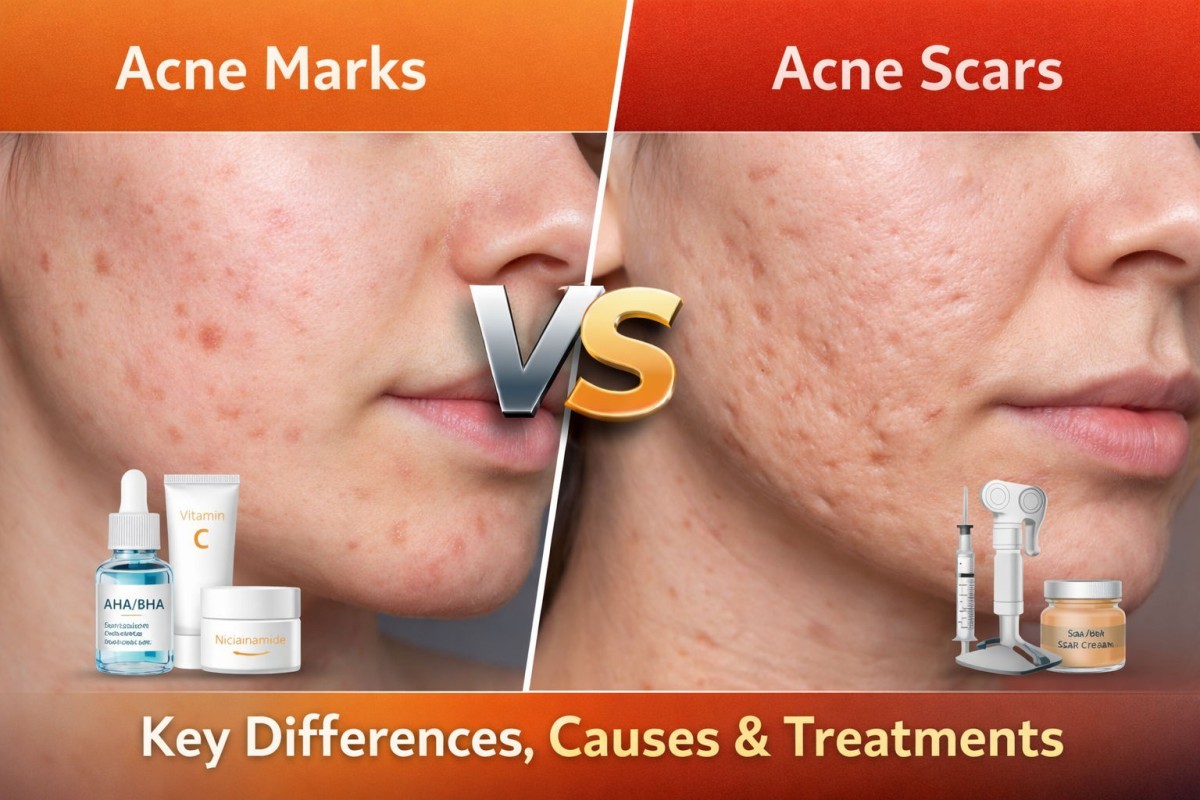
Acne has become a popular term associated with skincare issues and can make individuals tense and doubtful about their appearance. However, other terms such as “breakouts,” “acne marks,” and “acne scars” have been vaguely used, which makes it essential to gain clarity about their causes; early signs to identify them can help individuals to choose effective treatment options to treat their skin condition more cautiously.
An overview of acne marks
➜ Acne marks, also known as post-inflammatory hyperpigmentation or post-inflammatory erythema, are surface-level discolorations that occur after a pimple heals. They do not affect skin texture on a permanent basis. 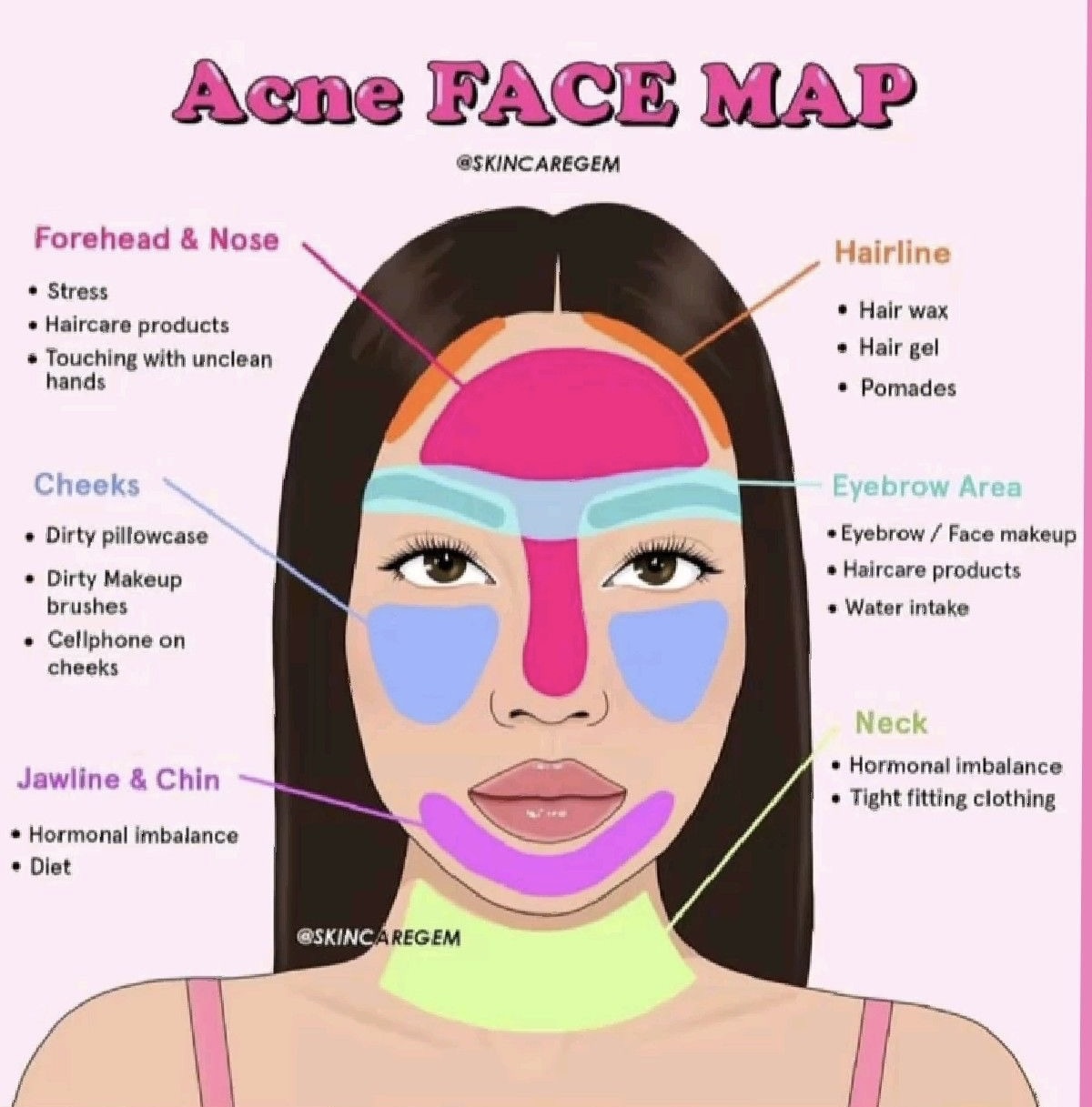
➜ Acne marks mostly look like red, pink, brown, or dark spots, feel smooth to the touch, can disappear over time, and become clearly noticeable in sunlight. 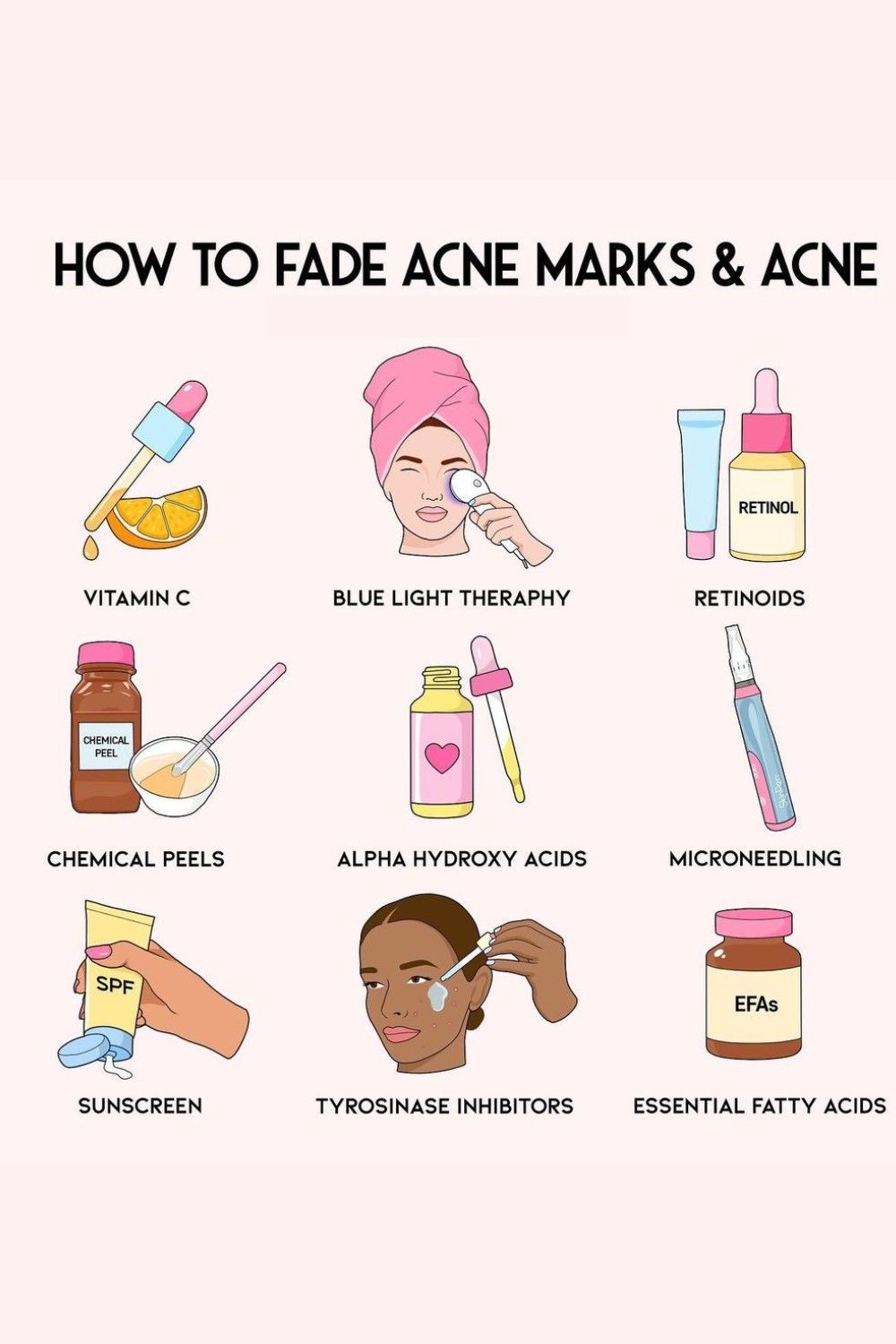
➜ Acne marks arise when skin recovers during a breakout, causing excessive melanin or dilated blood vessels that trigger discoloration.
➜ It can occur due to touching or squeezing pimples, extreme swelling, UV ray exposure without protection, or delayed intervention for acne and can be found most commonly with medium to deep skin types, as their melanin production is higher.
Sun exposure can worsen acne marks—discover how UV damage affects your skin.
Acne Scars: A Brief Introduction
➜ They usually form when acne impairs the deeper layer of the skin, which leads to uneven texture and compromised structure. Acne scars often leave a permanent impression on skin and are not often treatable by professional experts. 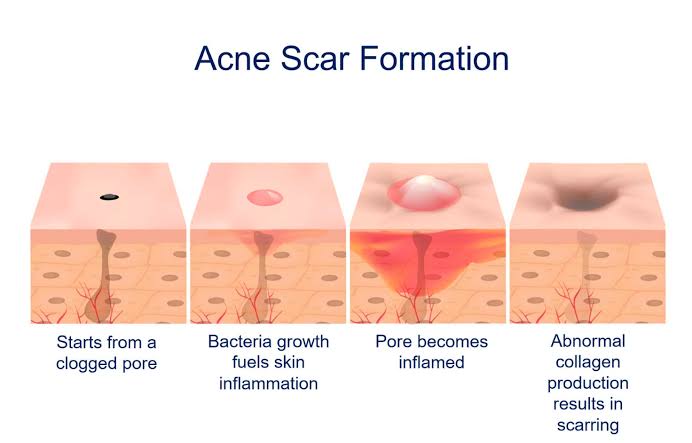
➜ There are also different types of acne scars, such as atrophic scars, such as sunken scars that occur from ice picks, boxcar, and rolling scars. Hypertrophic scars that had been triggered by extreme collagen production. 
➜ It mostly develops due to fluctuations of collagen levels and hereditary tendency. The difference between acne marks and acne scars is based upon discoloration, uneven skin tone, and time duration.
Are your marks actually scars? Learn how to identify different types of acne scars.
Treatment Options for Acne Marks
➜ Acne marks can be easily cured by using appropriate sunscreen to fight against skin discoloration as it becomes part of a regular skincare routine and leave-on treatment.
➜ Choosing products that contain vitamin C for enhancing skin radiance and visibly fading dark spots, niacinamide to improve tone uniformity and support barrier strength, alpha arbutin to work on excess melanin accumulation, and azelaic acid to calm visible redness for even-looking skin.
Consistency matters—build an acne-friendly skincare routine that supports healing.
Treatment Options for Acne Scars
➜ There are dermatologist-recommended treatments such as microneedling to help promote collagen synthesis and chemical peels to renew skin for a smoother, refined texture.
➜ Laser therapy helps to correct deep scars and pigmentation, subcision to release tight tissue that causes sunken scars, and fillers for visible softening of indented scars temporarily.
Thinking about microneedling or chemical peels? Know what really works for scar repair.
Conclusion
"Acne marks" and "acne scars" are mostly commonly used terms for describing skin problems, and they both differ in terms of their appearance, factors, and longevity. Acne marks mostly focus on discoloration on the skin that fades away with time. Acne scars can be seen as raised areas on the skin during the acne healing process and become permanent as they cause rapid changes in the amount of skin tissue. Mostly both of them are caused by inflammation, squeezing pimples, and the influence of genetic factors. Both of their intervention approaches revolve around lifestyle changes and advanced treatment options.